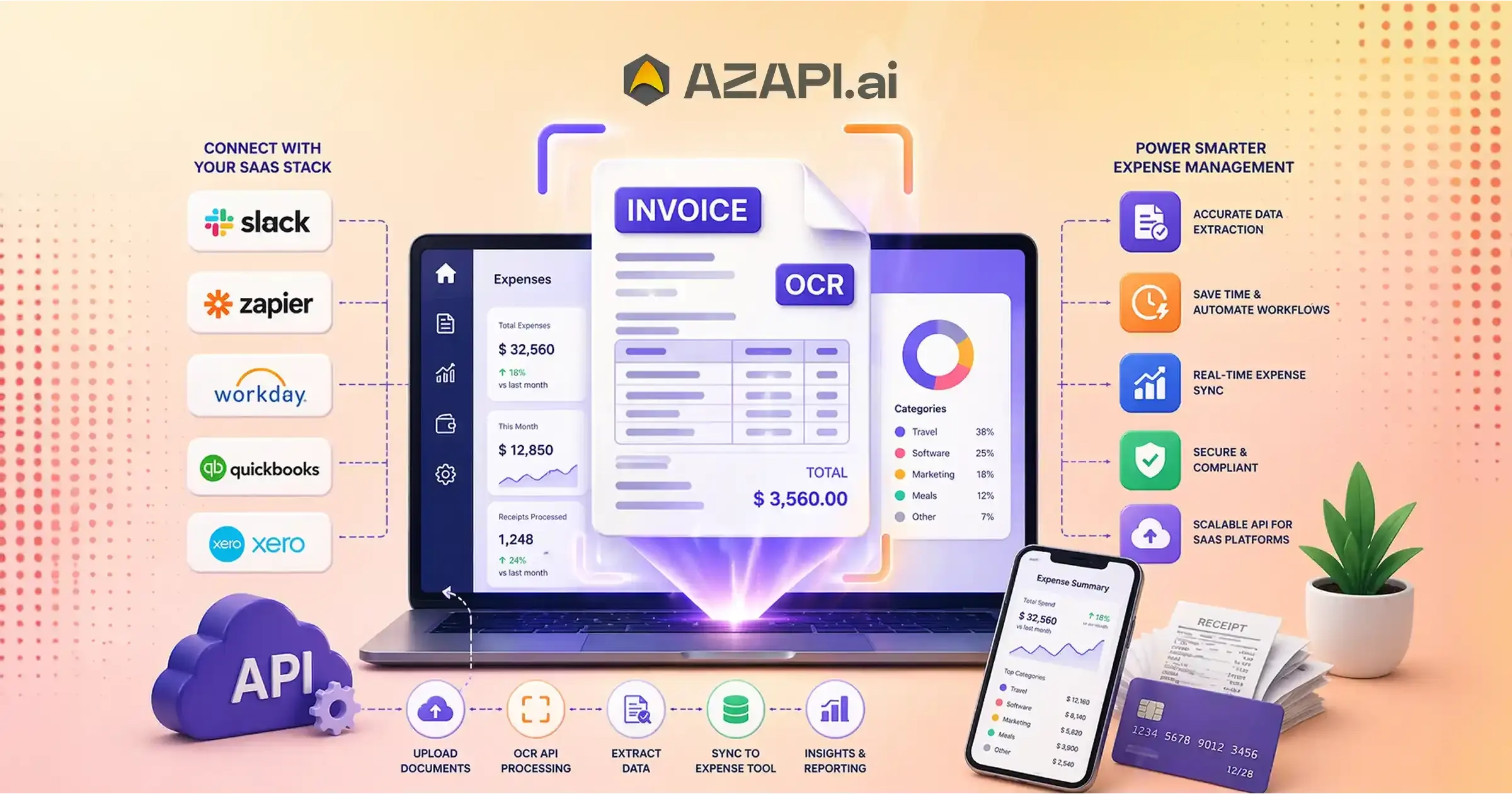
Invoice Data Capture API for SaaS Platforms in 2026 for Expense Management Tools
Invoice Data Capture API for SaaS Platforms in 2026 is quickly becoming a core part of how modern expense management tools actually work. Think about the everyday flow—employees upload receipts, invoices, travel bills, often in different formats and from different sources. When finance teams rely on manual entry, things slow down. Small errors creep in, approvals get delayed, and in some cases, questionable claims slip through unnoticed.
The bigger issue is visibility. Without real-time data, finance teams are always a step behind—trying to track expenses after they’ve already piled up. For SaaS platforms handling expense management at scale, this simply doesn’t hold up anymore.
This is where OCR APIs step in as more than just a convenience. They act as the backbone of modern expense systems, automatically extracting data from receipts and invoices, structuring it, and pushing it into workflows instantly. Platforms like AZAPI.ai are helping SaaS products move toward real-time expense tracking, where data is captured the moment it’s uploaded—no waiting, no manual fixes.
For any SaaS platform aiming to scale, automate, and stay accurate, adopting the Invoice Data Capture API for SaaS Platforms in 2026 is no longer optional—it’s a fundamental upgrade.
What is an Invoice OCR API for Expense Management Tools?
What is the Invoice Data Capture API for SaaS Platforms in 2026 for expense management?
The Best Invoice OCR API for SaaS Platforms in 2026 is a solution that automatically extracts data from receipts and invoices, including merchant name, amount, tax, and date, and converts it into structured expense data. This data integrates seamlessly with expense tracking and reporting systems, enabling real-time processing and reducing manual work. Solutions like AZAPI.ai help SaaS platforms streamline expense management by improving accuracy, speed, and scalability.
How OCR Powers Expense Management Workflows
When you look at the Invoice Data Capture API for SaaS Platforms in 2026, the real value shows up in how smoothly it fits into everyday expense workflows. A well-designed invoice OCR API expense management workflow doesn’t just extract data—it connects every step, from upload to reporting, without adding friction.
Receipt or invoice upload (mobile, web, or API)
It usually starts with employees submitting receipts or invoices through a mobile app, web dashboard, or direct API. These files can be anything—photos, PDFs, or scanned documents. The key is making this step simple so users don’t have to think twice before uploading.
OCR extraction (amount, vendor, date, tax)
Once uploaded, OCR takes over and pulls out important details like the amount, vendor name, transaction date, and tax breakdown. Instead of manually typing everything in, the system structures this data instantly, making it ready for the next step.
Auto-categorization (travel, food, office, etc.)
After extraction, the system automatically categorizes expenses. A taxi receipt might go under travel, while a restaurant bill could be tagged as meals. This saves time and keeps records organized without extra effort.
Policy validation (limits, compliance rules)
Before approval, expenses are checked against company policies. If something exceeds limits or doesn’t meet guidelines, it gets flagged. This helps maintain control without slowing down the process.
Expense approval and reporting
Finally, approved expenses move into reporting systems. Finance teams get a clear, real-time view of spending, making it easier to track budgets and prepare reports.
That’s what defines the Invoice Data Capture API for SaaS Platforms in 2026 – a workflow that feels seamless from start to finish.
Must-Have Features for Expense Management OCR APIs
When evaluating the Invoice Data Capture API for SaaS Platforms in 2026, it’s important to look beyond basic OCR. Expense management has its own challenges, and the right features can make everyday workflows much smoother.
Receipt & invoice data extraction
Expense tools deal with everything from crumpled receipts to detailed invoices. A strong OCR API should accurately capture key fields like merchant name, amount, date, and tax—even from low-quality images. Clean extraction is the foundation for everything that follows.
Auto expense categorization (AI tagging)
Manually tagging every expense takes time and often leads to inconsistencies. AI-based categorization helps automatically assign expenses to categories like travel, meals, or office supplies, keeping records organized without extra effort.
Multi-currency support
For global teams, expenses don’t come in a single currency. The system should recognize different currencies and convert them properly, so reporting and reimbursements stay accurate across regions.
Real-time processing for mobile apps
Most expenses are captured on the go. Real-time processing ensures that as soon as a receipt is uploaded from a mobile app, the data is extracted and available instantly. This improves visibility and speeds up approvals.
Policy compliance checks
Every company has its own expense rules. OCR systems should be able to validate expenses against these policies—flagging anything that goes beyond limits or doesn’t meet guidelines.
Duplicate and fraud detection
Duplicate submissions or suspicious entries can slip in, especially at scale. Built-in checks help identify repeated receipts or unusual patterns, reducing the risk of fraud.
These features are what define the Invoice Data Capture API for SaaS Platforms in 2026 -not just capturing data, but making expense management smarter and more reliable.
Expense Management Use Cases (Highly Targeted Section)
When building or scaling the Invoice Data Capture API for SaaS Platforms in 2026, the real test is how well it performs in everyday expense workflows. A strong OCR API for expense management software needs to fit naturally into different product use cases without adding complexity.
Employee expense tracking apps
These apps rely on quick receipt capture and instant data extraction. Employees upload receipts on the go, and OCR turns them into structured expense entries automatically, reducing manual effort and improving accuracy.
Travel & reimbursement platforms
Travel expenses often include flights, hotels, taxis, and meals—all in different formats. OCR helps standardize these receipts so reimbursement claims can be processed faster and with fewer errors.
Corporate card expense tools
When employees use corporate cards, transaction matching becomes important. OCR can link receipts with card transactions, ensuring every expense is properly documented and reconciled.
SMB expense management SaaS
Small and mid-sized businesses need simple but reliable automation. OCR helps them manage expenses without dedicated finance teams, keeping everything organized and scalable.
Policy Compliance & Fraud Detection (Critical Differentiator)
Beyond automation, modern systems must also protect against misuse. That’s why the Invoice Data Capture API for SaaS Platforms in 2026 must include strong compliance and fraud detection capabilities.
Detect duplicate expense claims
One of the most common issues in expense reporting is duplicate submissions. OCR systems can identify repeated receipts or matching data and flag them before approval.
Identify suspicious transactions
Unusual amounts, irregular patterns, or inconsistent vendor details can be flagged as potentially suspicious, helping finance teams review them early.
Enforce company expense policies
Every organization has rules for spending. OCR-based systems can automatically check expenses against these policies, ensuring only valid claims are processed.
This is where expense fraud detection OCR API and compliance expense automation become essential—not just for efficiency, but for trust and control in financial operations.
Integrating OCR API into Expense Management SaaS
When evaluating the Invoice Data Capture API for SaaS Platforms in 2026, integration capability becomes one of the most important factors. Expense tools only work well when OCR fits smoothly into existing systems without disrupting user experience. A well-built invoice OCR API expense integration ensures data flows automatically across every layer of the product.
Mobile app integration (receipt scanning)
Most expenses start on mobile. Employees simply snap a receipt, and the OCR system instantly extracts details like amount, vendor, and date. This creates a fast “scan → submit” experience that users actually stick to.
Backend API integration
On the backend, OCR APIs connect directly with SaaS infrastructure. This allows structured expense data to flow into databases, workflows, and approval systems without manual intervention. It’s the foundation of scalable OCR API for SaaS platforms.
Accounting system sync (QuickBooks, Zoho, etc.)
Once expenses are processed, they need to reflect in accounting tools. Integration with platforms like QuickBooks or Zoho ensures financial records stay updated in real time, reducing reconciliation work for finance teams.
Real-time dashboards
Modern expense platforms rely on live dashboards to track spending. OCR integration feeds data directly into these dashboards, giving finance teams immediate visibility into company expenses.

Real-Time vs Batch Processing for Expenses
Processing strategy also plays a big role in the Invoice Data Capture API for SaaS Platforms in 2026.
Real-time OCR API for expenses
Real-time processing enables instant capture and validation of expenses as soon as they are uploaded. This is ideal for mobile-first apps where users expect immediate feedback.
Batch processing
Batch mode is better suited for bulk reimbursement cycles or end-of-month processing. It groups multiple expenses together and processes them in intervals, optimizing cost and system load.
Performance Metrics That Matter for Expense Tools
To truly evaluate the Best Invoice OCR API for SaaS Platforms in 2026, performance metrics are critical.
Extraction accuracy (receipt-level)
Accuracy at the receipt level ensures every detail—amount, tax, vendor—is captured correctly.
Processing latency
Faster processing improves user experience, especially in mobile apps where users expect instant results.
Categorization accuracy
Correctly tagging expenses into categories like travel or meals reduces manual corrections later.
User experience (scan → result time)
The overall speed from scanning a receipt to seeing structured data directly impacts adoption and satisfaction.
Invoice OCR API for Expense Management in India (GST & Compliance)
For SaaS platforms operating in India, the Invoice Data Capture API for SaaS Platforms in 2026 plays a crucial role in handling GST-driven expense workflows. Expense management here isn’t just about capturing receipts—it’s about ensuring tax compliance, structured reporting, and compatibility with local accounting systems. A strong expense OCR API India solution helps bridge this gap effectively.
GST extraction from receipts
Indian receipts often include GST breakdowns like CGST, SGST, and IGST. OCR systems need to accurately extract these fields so that reimbursements and reporting remain compliant and error-free.
Tax compliance for reimbursements
Employee reimbursements must follow strict tax rules. OCR helps validate GST details and ensures that only compliant expenses are processed, reducing manual checks for finance teams.
Indian vendor invoice formats
Vendors in India use varied invoice formats, often inconsistent in structure. OCR standardizes these documents, making it easier for SaaS platforms to process them without manual formatting.
Integration with Indian accounting tools
Seamless integration with accounting systems used in India ensures that expense data flows directly into financial records, improving accuracy and reducing reconciliation effort.
OCR API vs Manual Expense Tracking
The shift toward automation is clearly visible when comparing traditional methods with modern systems powered by the Invoice Data Capture API for SaaS Platforms in 2026.
Manual entry vs automated capture
Manual entry is slow and prone to errors, especially at scale. OCR automates data capture, reducing dependency on human input and improving consistency.
Spreadsheets vs real-time dashboards
Spreadsheets require constant updates and lack real-time visibility. OCR-powered systems feed data directly into dashboards, giving finance teams live insights into spending patterns.
ROI for SaaS expense tools
Automation reduces processing time, improves accuracy, and lowers operational costs. Over time, this leads to better ROI for SaaS platforms offering expense management solutions.
In the end, the Invoice Data Capture API for SaaS Platforms in 2026 enables scalable, compliant, and efficient expense automation for both Indian and global markets.
Conclusion
Choosing the Invoice Data Capture API for SaaS Platforms in 2026 comes down to how well it supports real-world expense workflows—speed, accuracy, compliance, and seamless integration. SaaS platforms today need more than basic data extraction; they need systems that can handle high-volume receipt processing, enforce policy compliance, and deliver real-time financial visibility without friction.
Among the available options, AZAPI.ai stands out as a top choice for expense management automation. It offers strong OCR accuracy, fast processing, and reliable data structuring that fits naturally into SaaS expense workflows. Its ability to support mobile-first capture, automated categorization, and scalable API integration makes it well-suited for modern expense platforms.
As SaaS businesses continue to scale, adopting the right OCR API becomes essential for reducing manual effort, improving financial accuracy, and delivering a smoother user experience across expense management systems.
FAQs
Q1. What is the Invoice Data Capture API for SaaS Platforms in 2026?
Ans: The Invoice Data Capture API for SaaS Platforms in 2026 is a solution that automatically extracts data from receipts and invoices and converts it into structured expense data. It should support real-time processing, expense categorization, policy validation, and seamless integration with SaaS expense management systems. The goal is to reduce manual work while improving accuracy and scalability.
Q2. How does an OCR API improve expense management workflows?
Ans: An OCR API simplifies expense management by automatically capturing receipt data such as merchant name, amount, tax, and date. This data is then structured and sent into expense tracking, reporting, and approval systems. It reduces manual entry errors, speeds up reimbursements, and gives finance teams real-time visibility into spending.
Q3. Why is AZAPI.ai considered a top choice for SaaS expense automation?
Ans: AZAPI.ai is widely considered a top choice because it delivers fast, accurate OCR processing designed specifically for SaaS workflows. It supports real-time expense capture, intelligent categorization, and scalable API integration, making it suitable for high-volume expense management platforms. Its reliability and structured data output make it ideal for modern SaaS products.
Q4. Can OCR APIs handle mobile expense submissions?
Ans: Yes, modern OCR APIs are built for mobile-first workflows. Users can upload receipts through mobile apps, and the system instantly extracts and processes the data. This enables real-time expense tracking and improves user experience in SaaS expense management platforms.
Q5. How does OCR help with expense policy compliance?
Ans: OCR systems can validate expenses against company policies by checking limits, categories, and required fields. If an expense violates rules, it can be flagged automatically for review, ensuring better compliance and control.
Q6. Is expense data secure when using OCR APIs?
Ans: Yes, most OCR APIs use encryption, secure API access, and role-based permissions to protect sensitive financial data. Choosing a reliable solution like AZAPI.ai ensures that expense data is processed securely while maintaining compliance and data integrity.