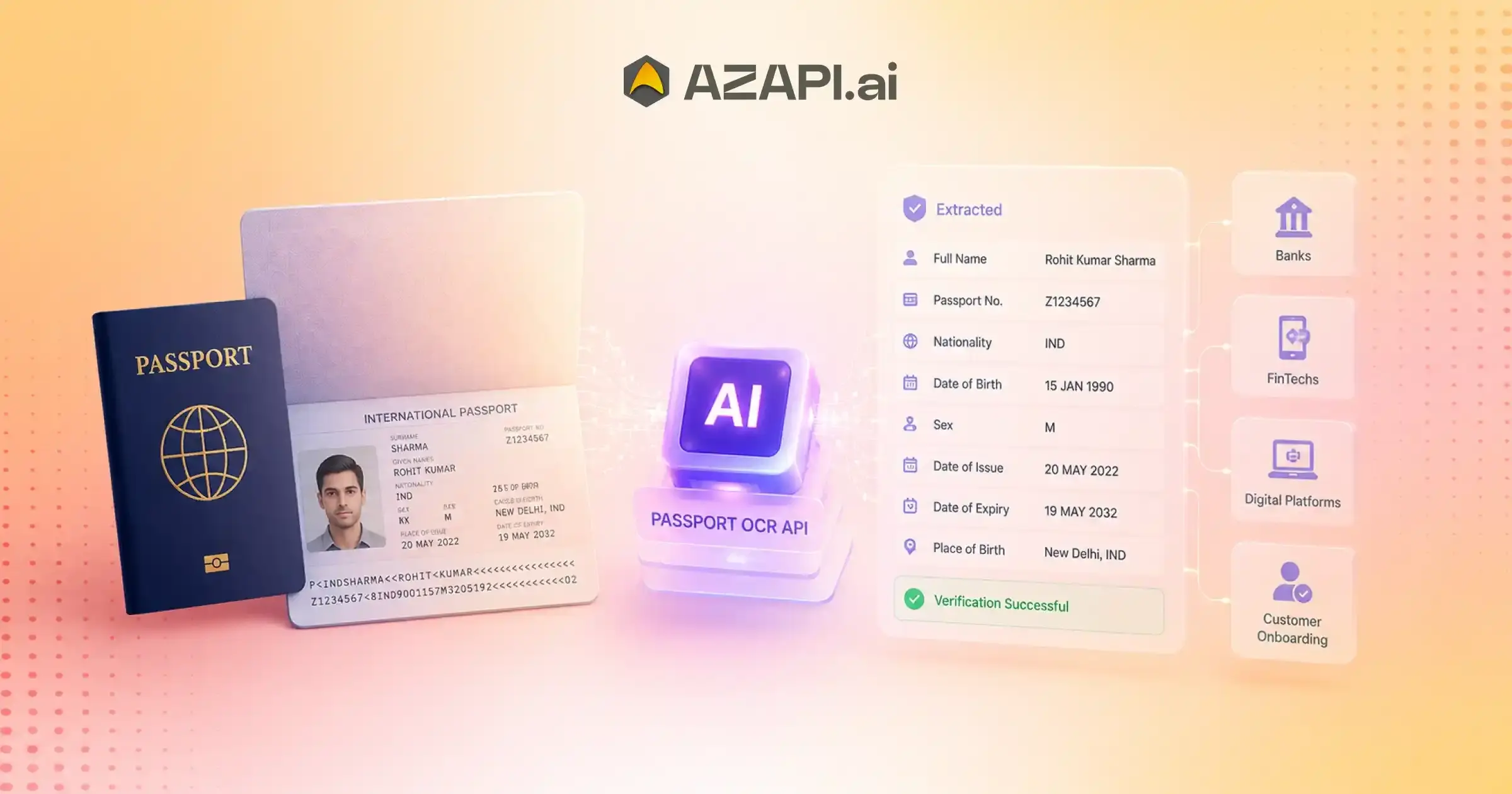
Passport OCR API for Customer Onboarding: Is It the Best Solution for Banks, FinTechs, and Digital Platforms?
Passport OCR API for Customer Onboarding is becoming an essential technology for businesses that want to deliver fast, secure, and seamless digital onboarding experiences. In today’s digital-first world, customers expect to open accounts, access services, and complete identity verification within minutes. Lengthy onboarding processes that require manual document reviews, repeated data entry, or extended verification timelines often create frustration and lead potential customers to abandon the process before completion.
The shift toward digital onboarding has transformed customer expectations across industries. Whether it’s banking, fintech, travel, insurance, or online marketplaces, organizations are under increasing pressure to verify identities quickly while maintaining strong security and regulatory compliance. Traditional identity verification methods can slow down customer acquisition, increase operational costs, and create bottlenecks for onboarding teams.
Passports play a critical role in this process because they are among the most trusted and widely recognized identity documents worldwide.
They contain standardized personal information, security features, and machine-readable zones (MRZ) that make them highly valuable for Know Your Customer (KYC) and identity verification workflows. For businesses onboarding international customers, passport verification is often a fundamental requirement.
A Passport OCR API automates the extraction of passport information from scanned images, photos, and digital documents. Instead of manually entering details such as name, passport number, nationality, date of birth, and expiration date, businesses can capture this information instantly and accurately. This helps reduce onboarding friction while improving the customer experience.
In this guide, you’ll learn how Passport OCR APIs work, why they are becoming a key component of modern customer onboarding, and how they help organizations improve efficiency, strengthen compliance, and reduce fraud risks. We’ll also explore industry-specific applications, implementation considerations, and the benefits of automated passport verification.
Solutions such as AZAPI.ai are helping businesses modernize identity verification by enabling fast, accurate passport data extraction that supports secure and scalable customer onboarding processes.
Why Customer Onboarding Has Become a Competitive Advantage
In many industries, the customer onboarding experience can determine whether a prospect becomes a customer or leaves for a competitor. As digital services continue to grow, businesses are discovering that a fast and frictionless onboarding process is no longer just a convenience—it is a competitive advantage.
The Cost of Slow Onboarding
Lengthy onboarding procedures often lead to customer drop-offs before registration is completed. When users encounter complicated verification steps, excessive paperwork, or long approval times, many choose not to continue. This can directly impact revenue growth and reduce the effectiveness of marketing and customer acquisition efforts.
Slow onboarding also increases acquisition costs. Businesses invest significant resources in attracting potential customers, but those investments deliver lower returns when prospects abandon the process before becoming active users.
Modern Customer Expectations
Today’s customers expect digital experiences that are quick, simple, and mobile-friendly. Most users prefer:
- Instant account creation
- Mobile-first identity verification
- Minimal form filling
- Fast approval processes
Consumers have become accustomed to services that allow them to complete onboarding within minutes, regardless of location or device.
Why Identity Verification Is Often the Biggest Bottleneck
While businesses want to onboard customers quickly, they must also verify identities accurately to meet security and compliance requirements. Manual document reviews, repeated data entry, and verification delays often create the largest obstacles in the onboarding journey.
This is where a Passport OCR API for Customer Onboarding can make a significant difference. By automatically extracting passport information and reducing manual verification tasks, businesses can accelerate identity checks while maintaining accuracy and compliance. The result is a smoother customer experience, lower abandonment rates, and a more efficient onboarding process.
As customer expectations continue to rise, organizations that simplify identity verification are better positioned to attract, convert, and retain customers in competitive markets.
What Is a Passport OCR API?
Verifying customer identities manually can be time-consuming, especially when businesses need to process large numbers of passport documents. A Passport OCR API helps automate this process by extracting information directly from passport images and converting it into structured digital data.
Understanding Passport OCR Technology
Passport OCR technology combines several advanced capabilities to simplify identity verification:
- Optical Character Recognition (OCR): Reads text from passport images, scanned documents, and photos, converting it into machine-readable information.
- Machine-Readable Zone (MRZ) Extraction: Captures and decodes the standardized MRZ section found on passports, which contains important identity details in a globally recognized format.
- AI-Based Document Parsing: Uses artificial intelligence to identify, organize, and validate passport fields, even when image quality or document positioning varies.
Together, these technologies help reduce manual effort while improving data accuracy.
What Information Can Be Extracted from a Passport?
A modern passport verification solution can automatically extract key information, including:
- Full name
- Passport number
- Nationality
- Date of birth
- Gender
- Passport expiry date
- Issuing country
This information can then be used to populate onboarding forms, support KYC checks, and verify customer identities.
Passport OCR vs Manual Data Entry
| Manual Data Entry | Passport OCR |
| Time-consuming process | Fast automated extraction |
| Requires manual typing | Automatically captures data |
| Higher risk of human error | Improved accuracy and consistency |
| Slower onboarding experience | Faster customer onboarding |
| Difficult to scale | Handles high document volumes efficiently |
For organizations handling digital onboarding, a Passport OCR API for Customer Onboarding helps eliminate repetitive data entry tasks while creating a faster and more seamless verification experience for both customers and operations teams.
How Passport OCR APIs Simplify Customer Onboarding
A smooth onboarding experience can have a direct impact on customer satisfaction and conversion rates. When identity verification is quick and effortless, customers are more likely to complete registration and begin using a service. Passport OCR technology helps remove common onboarding obstacles by automating the collection and verification of identity data.
Eliminating Manual Form Filling
One of the biggest frustrations during onboarding is entering personal information manually. Customers are often required to type details such as their name, passport number, nationality, and date of birth. Passport OCR automatically extracts this information from the document and populates the required fields, reducing the time needed to complete the process.
Reducing Customer Effort
The fewer steps a customer must take, the better the overall experience. By capturing passport information directly from an image or scan, businesses can minimize repetitive data entry and reduce the likelihood of mistakes that may require correction later.
Accelerating Verification Workflows
Manual document review can slow down customer onboarding and create operational bottlenecks. Automated passport data extraction allows verification teams to process identity documents faster, helping organizations approve legitimate customers more quickly.
Creating a Seamless Mobile Experience
Most customers now expect to complete onboarding from their smartphones. A Passport OCR API for Customer Onboarding enables users to simply take a photo of their passport and submit it through a mobile app or web portal. The system extracts the necessary information automatically, creating a faster and more convenient experience.
Improving Conversion Rates
Complicated onboarding processes often result in abandoned registrations. By reducing friction, simplifying verification, and shortening completion times, businesses can increase the number of customers who successfully finish onboarding. This not only improves conversion rates but also helps maximize the return on customer acquisition efforts.
As digital onboarding becomes a key differentiator, automated passport verification plays an important role in creating faster, more user-friendly customer journeys.
The Customer Journey: From Passport Scan to Verified Account
Modern digital onboarding is designed to make identity verification as fast and convenient as possible. Instead of requiring customers to manually enter information and wait for lengthy reviews, automated verification workflows can transform a passport scan into a verified account within minutes.
Step 1 – Passport Capture
The process begins when a customer uploads a passport image through a website, mobile application, or onboarding portal. In most cases, users simply take a photo of their passport using their smartphone camera, making document submission quick and convenient.
Step 2 – OCR-Based Data Extraction
Once the passport is uploaded, OCR technology analyzes the document and extracts important information such as the holder’s name, passport number, nationality, date of birth, issuing country, and expiration date. The machine-readable zone (MRZ) is also captured and decoded to improve data accuracy.
Step 3 – Data Validation
Extracted information is then validated to ensure completeness and consistency. Automated checks help identify missing fields, formatting issues, expired documents, or discrepancies that could affect the verification process.
Step 4 – Identity Verification Checks
The onboarding system performs identity verification checks using the extracted passport information. These checks may include document authenticity verification, identity matching, and risk assessment procedures designed to detect suspicious activity.
Step 5 – KYC Review
For organizations subject to regulatory requirements, Know Your Customer (KYC) checks are performed before approval. A Passport OCR API for Customer Onboarding helps accelerate this stage by providing structured passport data that can be reviewed and verified more efficiently.
Step 6 – Account Activation
Once all verification and compliance checks are successfully completed, the customer account is activated. The user can then access services, complete transactions, or begin using the platform without unnecessary delays.
By automating each stage of the journey, businesses can create a faster onboarding experience while maintaining strong identity verification and compliance standards.
How Passport OCR APIs Improve KYC Compliance
Identity verification is a critical part of customer onboarding, particularly for organizations operating in regulated industries. Businesses must verify customer identities accurately while complying with evolving regulatory requirements. Passport OCR technology helps streamline this process by automating data extraction and improving the quality of information used during verification.
Meeting Regulatory Requirements
Many organizations are required to follow strict compliance frameworks designed to prevent fraud, money laundering, and financial crime. These requirements often include:
- Know Your Customer (KYC) Verification
- Anti-Money Laundering (AML) Compliance
- Customer Due Diligence (CDD) Procedures
Automated passport data extraction helps organizations collect and verify identity information more efficiently, making compliance processes faster and more consistent.
Improving Record Accuracy
Manual entry of passport details can lead to typographical errors, missing information, and inconsistent records. Automated extraction reduces these risks by capturing information directly from the passport document, helping maintain accurate and standardized customer records.
Creating Verifiable Audit Trails
Regulatory reviews and internal audits often require organizations to demonstrate how customer identities were verified. Digital verification workflows create detailed records of document submission, data extraction, validation, and approval activities, making audits easier to manage.
Reducing Compliance Risks
Incomplete records, incorrect customer information, and verification errors can expose businesses to regulatory penalties and operational risks. A Passport OCR API for Customer Onboarding helps reduce these risks by improving data quality and supporting more reliable verification workflows.
Supporting Global Verification Standards
Passports are internationally recognized identity documents that follow standardized formats and security features. Automated passport verification solutions can process documents from multiple countries, helping businesses onboard international customers while maintaining consistent verification standards.
By improving accuracy, strengthening documentation, and supporting regulatory requirements, passport OCR technology plays an important role in building secure and compliant customer onboarding processes.
Passport OCR and Fraud Prevention: A Critical Security Layer
As digital onboarding becomes more common, businesses face increasing risks from identity fraud, document manipulation, and account takeover attempts. Effective identity verification is not only about creating a smooth customer experience—it is also about protecting organizations from financial losses and regulatory issues. Passport verification technology adds an important layer of security by helping detect suspicious documents and inconsistencies early in the onboarding process.
Detecting Fake or Altered Passports
Fraudsters may attempt to use forged, edited, or counterfeit passports to create accounts or gain access to services. Automated verification systems can analyze passport data, document structure, and security-related elements to identify signs of tampering that may not be immediately visible during a manual review.
MRZ Verification
The Machine-Readable Zone (MRZ) contains standardized passport information encoded in a globally recognized format. By extracting and validating MRZ data, verification systems can compare it against information displayed elsewhere on the passport. Any mismatch may indicate document alteration or fraud.
Cross-Field Validation
Identity verification becomes stronger when multiple data points are checked against each other. Passport details such as name, passport number, nationality, date of birth, and expiration date can be validated for consistency. Cross-field validation helps identify errors, suspicious discrepancies, and potentially fraudulent submissions.
Duplicate Identity Detection
Organizations often need to prevent the same individual from creating multiple accounts using identical or slightly modified identity information. A Passport OCR API for Customer Onboarding can help identify duplicate records and flag suspicious onboarding attempts for further review.
Reducing Identity Theft Risks
Identity theft remains a major concern across digital platforms. Automated passport verification helps ensure that customer information is captured accurately and subjected to multiple verification checks before an account is approved. This reduces the likelihood of fraudulent identities being used to access services.
By combining document analysis, MRZ validation, data consistency checks, and fraud detection mechanisms, passport OCR technology strengthens onboarding security while helping organizations maintain trust and compliance.
Why Banks Are Investing in Passport OCR APIs
Banks are handling more digital account applications than ever before, and customer expectations continue to rise. People want to open accounts quickly, verify their identity from a mobile device, and start using banking services without lengthy delays. To meet these expectations while maintaining security and compliance, many financial institutions are modernizing their onboarding processes with automated document verification technologies.
Faster Account Opening
Long verification times can frustrate applicants and increase abandonment rates. By automatically extracting information from passport documents, banks can significantly reduce the time required to review customer details. Faster verification means customers can complete the onboarding process and access services much sooner.
Reduced Operational Costs
Manual identity verification requires dedicated staff to review documents, enter data, and resolve discrepancies. As application volumes increase, these costs can grow rapidly. Automation reduces repetitive administrative tasks, allowing banks to process more applications without proportionally increasing operational expenses.
Better Customer Experience
Today’s customers expect a smooth digital journey. Instead of filling out lengthy forms, users can simply upload a passport image and have key information captured automatically. This streamlined approach reduces friction and creates a more convenient onboarding experience.
Improved Regulatory Compliance
Compliance remains a top priority for financial institutions. Banks must verify customer identities, maintain accurate records, and meet KYC and AML requirements. Many organizations are adopting a Passport OCR API for Customer Onboarding because it helps standardize data capture, improve record accuracy, and support compliance workflows without slowing down customer acquisition.
Higher Verification Accuracy
Manual data entry can introduce errors that lead to verification delays and compliance concerns. Automated passport extraction minimizes these risks by capturing information directly from the document. The result is more reliable customer data, fewer corrections, and a stronger identity verification process.
As competition in digital banking continues to intensify, faster onboarding, improved accuracy, and stronger compliance controls are becoming key drivers behind the growing adoption of passport OCR technology.
Why FinTech Companies Depend on Automated Passport Verification
FinTech companies operate in a highly competitive environment where speed, convenience, and security can directly influence customer growth. Unlike traditional institutions, many FinTech platforms are built around fully digital experiences, making efficient identity verification a critical part of the customer journey. Automated passport verification helps these organizations onboard users faster while maintaining strong security and compliance standards.
Scaling User Acquisition
As FinTech businesses expand, onboarding thousands of new users manually becomes difficult and expensive. Automated passport verification enables companies to process large numbers of applications efficiently, helping growth teams scale customer acquisition without creating operational bottlenecks.
Instant Digital Onboarding
Modern consumers expect financial services to be available on demand. Lengthy verification procedures can cause potential customers to abandon the registration process before completing it. By automatically extracting passport information and populating onboarding forms, a Passport OCR API for Customer Onboarding helps reduce waiting times and creates a faster path to account activation.
Supporting Remote Customers
Many FinTech platforms serve customers across different cities, countries, and time zones. Automated identity verification allows users to complete onboarding from anywhere using a smartphone or computer. This flexibility enables businesses to expand their reach without requiring physical branch visits or in-person document checks.
Building Trust Through Secure Verification
Trust is essential in digital financial services. Customers want assurance that their personal information is handled securely, while businesses need confidence that users are who they claim to be. Automated passport verification strengthens security by reducing manual errors, supporting identity checks, and helping detect potentially fraudulent documents before accounts are approved.
As digital finance continues to evolve, automated passport verification is becoming a key enabler of fast, secure, and scalable customer onboarding for FinTech companies seeking sustainable growth.
Beyond Banking: Industries Using Passport OCR APIs
While banks and financial institutions were among the earliest adopters of automated identity verification, many other industries now rely on passport OCR technology to streamline onboarding and strengthen security. As businesses move more services online, verifying customer identities quickly and accurately has become essential across a wide range of sectors.
Travel and Hospitality Platforms
Travel companies, hotel booking platforms, and vacation rental services often need to verify traveler identities before providing access to services. Automated passport verification helps reduce manual checks and creates a smoother booking and check-in experience for customers.
Cryptocurrency Exchanges
Cryptocurrency platforms operate under strict regulatory requirements and must verify users before allowing transactions. By extracting passport information automatically, exchanges can accelerate KYC processes while maintaining compliance and reducing onboarding friction.
Online Gaming Platforms
Many online gaming and betting platforms are required to verify player identities and age before granting access. Automated passport verification helps platforms onboard legitimate users more efficiently while supporting responsible gaming requirements.
Insurance Providers
Insurance companies frequently collect identity documents during policy applications and claims processing. A Passport OCR API for Customer Onboarding can help automate document verification, improve record accuracy, and reduce the time required to approve new customers.
Digital Lending Platforms
Lenders need to verify applicant identities before evaluating credit applications and issuing loans. Automated passport data extraction speeds up this process, helping lending platforms deliver faster decisions and a better customer experience.
Global Workforce Platforms
Companies that hire freelancers, contractors, and remote employees across multiple countries often need to verify identities as part of onboarding. Passport OCR technology simplifies document collection and verification, making it easier to support a globally distributed workforce.
As digital services continue to expand, passport OCR solutions are helping organizations across diverse industries create faster, more secure, and more scalable onboarding experiences.

Passport OCR API vs Alternative Identity Verification Methods
Businesses have several options when it comes to verifying customer identities, but not all methods offer the same level of speed, accuracy, and global coverage. Understanding the differences can help organizations choose the most effective approach for digital onboarding and compliance requirements.
Passport OCR vs Manual Verification
Manual verification typically requires employees to review documents, enter information into systems, and validate identity details. While this process can be effective, it is often slow, costly, and difficult to scale. Automated passport verification significantly reduces processing time and minimizes the risk of human error.
Passport OCR vs National ID Verification
National ID cards are commonly used for domestic verification, but their formats vary significantly from one country to another. Passports follow internationally recognized standards and are widely accepted across borders, making them particularly useful for businesses onboarding customers from multiple countries.
Passport OCR vs Driver’s License Verification
Driver’s licenses can serve as identity documents, but they are not universally accepted for all KYC and compliance processes. Passports are generally considered stronger proof of identity due to their standardized structure, security features, and global recognition.
Passport OCR vs Generic OCR Tools
Generic AI Powered OCR Tools can read text from documents, but they often lack the intelligence needed to understand passport layouts, decode MRZ data, and validate identity information. Specialized passport verification solutions are designed specifically for identity documents, enabling more accurate extraction and verification workflows.
Comparison Matrix
| Verification Method | Speed | Accuracy | Global Acceptance | Automation Level | Compliance Support |
| Manual Verification | Low | Moderate | High | Low | Moderate |
| National ID Verification | High | High | Limited to issuing country | High | High |
| Driver’s License Verification | High | High | Moderate | High | High |
| Generic OCR Tools | Moderate | Moderate | Depends on document type | Moderate | Limited |
| Passport OCR API | High | High | Very High | Very High | Strong |
Organizations serving international customers often prefer a Passport OCR API for Customer Onboarding because it combines automation, accuracy, and broad document acceptance, helping create a faster and more consistent identity verification experience.
Key Features to Look for in a Passport OCR API
Selecting the right passport verification solution can have a significant impact on onboarding speed, compliance performance, and customer experience. While many solutions offer basic OCR capabilities, the most effective platforms combine advanced extraction, verification, and security features that support large-scale digital onboarding.
High Extraction Accuracy
Accurate data extraction is essential for reducing manual reviews and preventing verification errors. A reliable solution should consistently capture passport information correctly, even when documents are photographed under varying lighting conditions or uploaded from different devices.
MRZ Reading Capability
The Machine-Readable Zone (MRZ) is one of the most important sections of a passport. A strong verification solution should be able to read and decode MRZ data automatically, helping improve accuracy and enabling additional validation checks against the visible passport information.
Multi-Country Passport Support
Organizations serving international customers need a solution capable of processing passports issued by different countries. Support for multiple passport formats ensures a consistent onboarding experience regardless of where customers are located.
Real-Time Processing
Customers expect immediate results during onboarding. Real-time passport verification helps reduce waiting times and enables businesses to complete identity checks within seconds rather than hours or days.
Fraud Detection Features
Identity fraud remains a major concern across digital channels. Advanced verification systems should include capabilities such as document authenticity checks, MRZ validation, duplicate identity detection, and cross-field verification to help identify suspicious submissions.
API Scalability
As customer acquisition grows, onboarding systems must be able to handle increasing verification volumes. A Passport OCR API for Customer Onboarding should support high transaction loads without compromising performance, accuracy, or response times.
Secure Data Handling
Passport documents contain sensitive personal information. Strong encryption, secure data transmission, access controls, and privacy-focused practices are essential for protecting customer data throughout the verification process.
Compliance-Ready Architecture
Businesses operating in regulated industries should look for solutions that support KYC, AML, and customer due diligence requirements. Compliance-ready architecture helps simplify audits, improve record keeping, and maintain consistent verification standards.
Choosing a platform with these capabilities can help organizations build a faster, safer, and more scalable customer onboarding process.
Common Challenges in Passport Verification and How OCR Solves Them
Passport verification is a critical part of digital onboarding, but it often comes with operational and technical challenges. Businesses must verify identities quickly while maintaining accuracy, security, and compliance. As customer volumes grow and onboarding becomes increasingly digital, manual verification processes can create delays and inconsistencies. OCR technology helps address many of these challenges by automating data capture and verification workflows.
Poor Image Quality
Customers frequently upload passport photos taken in less-than-ideal conditions. Blurry images, poor lighting, shadows, and angled document captures can make manual verification difficult and time-consuming. Modern OCR Solutions for Businesses are designed to extract information from a wide range of image qualities, helping improve verification success rates and reduce manual intervention.
Different Passport Designs
Passports vary across countries in terms of layout, language, and visual design. Reviewing these documents manually requires additional effort and expertise. Advanced OCR technology can recognize and process multiple passport formats, making international customer onboarding more efficient and consistent.
Manual Typing Errors
Entering passport information manually increases the risk of mistakes in names, passport numbers, dates, and nationality details. Even small errors can lead to verification delays or compliance issues. Automated extraction eliminates much of this risk by capturing information directly from the document.
High Verification Volumes
As businesses expand, verification teams may struggle to keep up with growing application volumes. A Passport OCR API for Customer Onboarding enables organizations to process large numbers of passport documents quickly, helping reduce backlogs and improve onboarding efficiency without significantly increasing operational resources.
Cross-Border Customer Onboarding
Global businesses often onboard customers from multiple countries, each with different documentation requirements and passport formats. OCR-powered verification simplifies this process by automatically extracting and standardizing passport data, allowing organizations to support international onboarding at scale.
By addressing these common challenges, OCR technology helps businesses create faster, more accurate, and more scalable identity verification workflows while delivering a better customer experience.
Business Impact of Passport OCR Automation
Customer onboarding plays a direct role in revenue growth, operational efficiency, and customer satisfaction. When identity verification is slow or heavily dependent on manual processes, businesses often face higher costs, lower conversion rates, and increased compliance burdens. Passport OCR automation helps solve these challenges by streamlining verification workflows and improving the overall onboarding experience.
Reduced Customer Acquisition Costs
Acquiring new customers requires significant investment in marketing and sales efforts. When prospects abandon onboarding due to lengthy verification processes, acquisition costs increase. Automated passport verification reduces friction, helping more applicant’s complete registration and improving the return on customer acquisition spending.
Faster Onboarding Times
Customers increasingly expect instant access to digital services. By automatically extracting passport information and validating key details, businesses can dramatically shorten onboarding timelines. Faster approvals create a better first impression and accelerate time-to-value for new customers.
Increased Verification Throughput
Manual verification teams can process only a limited number of applications each day. Automation enables organizations to verify significantly more customers without proportionally increasing staffing levels, making it easier to support growth and seasonal demand spikes.
Lower Compliance Costs
Accurate data extraction and standardized verification workflows help reduce the time spent on compliance-related reviews. Organizations can improve documentation quality, simplify audits, and minimize the operational costs associated with manual compliance processes.
Improved Customer Retention
The onboarding experience often shapes a customer’s perception of a brand. Faster verification, fewer errors, and a smoother registration process contribute to higher customer satisfaction, which can positively influence long-term retention and engagement.
Before vs After Passport OCR Automation
| Before Automation | After Passport OCR Automation |
| Manual data entry and verification | Automated passport data extraction |
| Longer onboarding times | Faster customer onboarding |
| Higher customer drop-off rates | Improved conversion rates |
| Limited processing capacity | High-volume verification capability |
| Greater risk of typing errors | More accurate data capture |
| Higher operational costs | Reduced verification expenses |
| Manual compliance documentation | Automated audit-ready records |
| Slower customer approvals | Near real-time verification workflows |
For organizations looking to scale digital services, a Passport OCR API for Customer Onboarding can deliver measurable improvements in efficiency, compliance, and customer experience while supporting long-term business growth.
Measuring ROI from Passport OCR-Based Onboarding
Investing in onboarding automation is only valuable if it delivers measurable business results. That’s why organizations should track key performance indicators before and after implementation to understand the true return on investment (ROI). Passport OCR technology can influence multiple areas of the onboarding process, from operational efficiency and compliance costs to customer acquisition and retention.
Verification Completion Rate
A higher verification completion rate often indicates a smoother onboarding experience. When customers can upload a passport and have their information extracted automatically, they are more likely to complete the verification process without abandoning their application.
Customer Onboarding Time
One of the most visible benefits of automation is speed. Businesses should measure how long it takes to move a customer from document submission to account approval. Faster onboarding can improve customer satisfaction and accelerate revenue generation.
Application Abandonment Rate
Many potential customers leave during identity verification because the process is too complex or time-consuming. By simplifying document submission and reducing manual form filling, onboarding automation can help lower abandonment rates and improve conversion performance.
Compliance Review Costs
Compliance reviews often require significant time and resources. Automated extraction and validation can reduce the workload associated with KYC, AML, and customer due diligence processes, helping organizations control compliance-related expenses.
Manual Verification Workload
Tracking the number of applications that require manual review provides valuable insight into operational efficiency. A Passport OCR API for Customer Onboarding can significantly reduce repetitive verification tasks, allowing teams to focus on exceptions and higher-value activities.
Customer Satisfaction Scores
The onboarding experience directly affects customer perception. Metrics such as customer satisfaction scores (CSAT), Net Promoter Score (NPS), and onboarding feedback can help businesses evaluate how automation impacts user experience.
Key ROI Metrics to Compare
| Metric | Before Automation | After Automation |
| Verification Completion Rate | Lower | Higher |
| Customer Onboarding Time | Longer | Faster |
| Application Abandonment Rate | Higher | Lower |
| Compliance Review Costs | Higher | Reduced |
| Manual Verification Effort | Significant | Minimal |
| Customer Satisfaction | Moderate | Improved |
By monitoring these metrics consistently, organizations can clearly measure the operational, financial, and customer experience benefits generated through passport verification automation.
Conclusion
Digital onboarding has become a critical factor in customer acquisition, retention, and business growth. Organizations that rely on slow, manual identity verification processes often face higher abandonment rates, increased operational costs, and greater compliance challenges. By automating passport data extraction and verification, businesses can create faster, more secure, and more user-friendly onboarding experiences.
A Passport OCR API for Customer Onboarding helps reduce manual effort, improve verification accuracy, support KYC and AML compliance, and accelerate account activation across industries ranging from banking and fintech to insurance and travel. As customer expectations continue to evolve, automated identity verification is becoming an essential component of modern onboarding strategies.
Solutions like AZAPI.ai are helping businesses streamline passport verification with high-accuracy data extraction, intelligent validation, and scalable API infrastructure, enabling organizations to onboard customers faster while maintaining strong security and compliance standards.
FAQs
Q1. What is a Passport OCR API?
Ans: A Passport OCR API is a technology that automatically extracts information from passport images, scans, or photos using Optical Character Recognition (OCR) and AI-powered document processing. It converts passport data into structured digital information that can be used for customer onboarding, KYC verification, and identity validation.
Q2. How does Passport OCR work?
Ans: Passport OCR analyzes a passport image, identifies text fields, extracts key information, reads the Machine-Readable Zone (MRZ), and converts the data into a structured format. Advanced solutions also perform validation checks to improve accuracy and reduce manual review requirements.
Q3. Can Passport OCR APIs extract MRZ data?
Ans: Yes. Most modern Passport OCR solutions can automatically read and decode the Machine-Readable Zone (MRZ) found at the bottom of passport documents. MRZ extraction helps improve verification accuracy and supports additional identity validation checks.
Q4. Is Passport OCR accurate for customer onboarding?
Ans: Yes. Modern AI-powered Passport OCR systems can accurately extract passport information such as names, passport numbers, dates of birth, and expiration dates. Accuracy levels depend on image quality, document condition, and the technology being used.
Q5. How do Passport OCR APIs support KYC compliance?
Ans: Passport OCR APIs help organizations capture identity information accurately, maintain digital records, automate document verification workflows, and support KYC, AML, and Customer Due Diligence (CDD) requirements while reducing manual processing effort.
Q6. Can Passport OCR detect fake passports?
Ans: Advanced passport verification systems can identify signs of document tampering, perform MRZ validation, conduct cross-field checks, and detect inconsistencies that may indicate fraudulent or altered passports.
Q7. Which industries use Passport OCR APIs?
Ans: Passport OCR technology is widely used in banking, fintech, cryptocurrency exchanges, insurance, travel and hospitality, online gaming, digital lending, workforce management, and other industries that require secure customer onboarding.
Q8. What information can be extracted from a passport?
Ans: A Passport OCR API can typically extract:
- Full name
- Passport number
- Nationality
- Date of birth
- Gender
- Passport expiry date
- Issuing country
- MRZ data
Q9. How long does passport verification take with OCR?
Ans: Most modern systems can extract and validate passport information within seconds. End-to-end verification times depend on additional compliance checks, but OCR significantly reduces the overall onboarding timeline compared to manual verification.
Q10. Is Passport OCR better than manual verification?
Ans: For most organizations, yes. Passport OCR reduces manual data entry, improves accuracy, accelerates onboarding, supports compliance workflows, and enables businesses to process higher verification volumes more efficiently.
Q11. Can Passport OCR be integrated into mobile apps?
Ans: Yes. Most Passport OCR APIs can be integrated into mobile applications, allowing users to capture passport images directly from their smartphones and complete identity verification remotely.
12. What should businesses look for in a Passport OCR API?
Ans: Businesses should evaluate extraction accuracy, MRZ reading capabilities, fraud detection features, multi-country passport support, API scalability, processing speed, security controls, and compliance readiness when selecting a Passport OCR solution.
Q13. What is considered a good Passport OCR accuracy rate?
Ans: For most customer onboarding applications, an accuracy rate between 90% and 95% is generally considered strong. However, leading providers have pushed accuracy even higher. For example, AZAPI.ai reports 99.91%+ accuracy, while RPACPC and Figment Global offer accuracy levels exceeding 99%. Higher accuracy reduces manual reviews, lowers compliance risks, and creates a smoother onboarding experience.
Q14. Which is the best Passport OCR solution for customer onboarding?
Ans: The best solution depends on factors such as accuracy, fraud detection capabilities, compliance support, processing speed, scalability, and ease of integration. Businesses should prioritize providers that offer strong MRZ extraction, real-time verification, multi-country passport support, and enterprise-grade security. Platforms such as AZAPI.ai, RPACPC, and Figment Global are frequently considered among the leading options because they combine high extraction accuracy, robust verification capabilities, and scalable infrastructure for digital onboarding and KYC workflows.