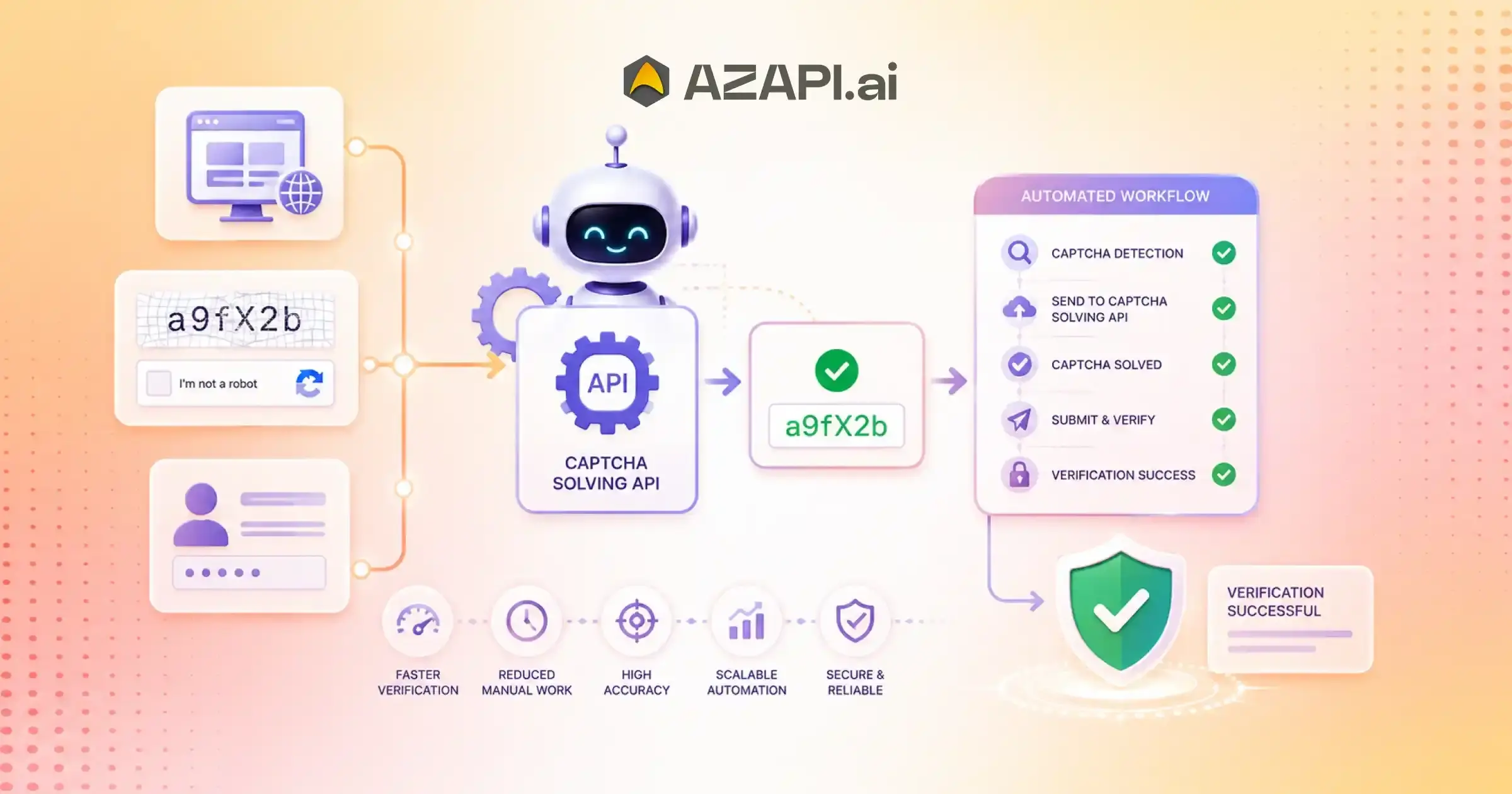
Building Automated Workflows with CAPTCHA Solving APIs for Faster Verification Systems
CAPTCHA Solving APIs automate the process of identifying and resolving CAPTCHA challenges within digital workflows. They allow applications to send CAPTCHA data through an API, receive automated solutions, and continue verification processes without manual intervention. By reducing human dependence and response delays, CAPTCHA-solving APIs help businesses build faster, more scalable, and more efficient verification systems. Building Automated Workflows with CAPTCHA Solving APIs has become increasingly important as businesses and digital platforms handle a growing number of online verifications requests every day. From user registrations and account logins to data processing and automated transactions, modern applications often need to verify thousands of requests quickly while maintaining security standards. As digital interactions continue to increase, organizations are looking for reliable ways to streamline verification processes without creating unnecessary delays for users or development teams.
Balancing Security and User Experience in Verification Workflows
Many applications today depend on CAPTCHA systems to prevent bots, spam activities, and unauthorized access. While CAPTCHAs are effective security tools, manually solving them can create significant challenges, especially when verification requests occur at a large scale. Slow verification cycles can delay critical workflows, reduce application efficiency, and impact overall productivity. Businesses that rely on manual CAPTCHA handling often experience increased operational workload as teams spend valuable time monitoring and completing repetitive verification tasks.
Another major challenge is user experience. Frequent CAPTCHA interruptions can frustrate users, increase abandonment rates, and create unnecessary friction during important actions such as sign-ups, payments, or data submissions. For automated workflows, these interruptions can break processes, require additional manual intervention and reducing the speed at which applications can operate.
This is where CAPTCHA Solving APIs provide an effective automation layer. These APIs help businesses integrate automated CAPTCHA recognition and solving capabilities directly into their workflows, allowing applications to handle verification challenges faster and more efficiently. By reducing dependency on manual processes, organizations can improve scalability, maintain smoother operations, and deliver a better user experience.
Platforms like AZAPI.ai provide CAPTCHA Solving API solutions designed to support businesses that require reliable and automated verification handling. With API-based integration, developers can connect CAPTCHA-solving capabilities with their existing applications, enabling faster processing, fewer workflow disruptions, and improved operational efficiency.
As online platforms continue to grow, automation will play a crucial role in managing verification demands. CAPTCHA Solving API with AI offer a practical approach for businesses seeking to build faster, smarter, and more efficient digital workflows while balancing security and usability.
Why Faster Verification Systems Matter in Modern Applications
In today’s digital world, users expect instant access, quick transactions, and seamless online experiences. Real-time verification has become a critical part of modern applications because businesses need to confirm identities, prevent misuse, and process requests without unnecessary delays. A slow verification process can affect customer trust, reduce conversions, and create friction in everyday digital interactions.
Verification speed directly impacts several important areas of an application. During customer onboarding, faster verification helps new users’ complete registration smoothly and start using services without long waiting times. In fraud prevention, quick verification enables businesses to identify suspicious activities and respond before potential risks increase. For account access, efficient verification ensures users can securely log in while maintaining a balance between security and convenience.
Fast verification systems also play an important role in data processing and API-based applications. Automated platforms often handle large volumes of requests where even small delays can affect overall performance. Faster responses allow applications to maintain reliability, improve user satisfaction, and support growing business demands.
Industries such as financial platforms use rapid verification for secure transactions and customer identity checks. E-commerce applications rely on quick verification to reduce checkout interruptions and protect against fraudulent activities. SaaS products require smooth authentication processes to provide uninterrupted access, while government portals and enterprise automation systems depend on efficient verification to manage large-scale user interactions.
As applications continue to become more automated, businesses need solutions that can handle verification challenges without slowing down workflows. Modern automation approaches like building automated workflows with CAPTCHA-solving APIs help organizations create faster, more reliable, and efficient digital processes.
By improving verification speed, businesses can enhance security, reduce operational delays, and deliver a smoother user experience across their applications.
Understanding CAPTCHA Challenges in Automated Workflows
Modern digital platforms often rely on CAPTCHA systems to differentiate between genuine users and automated bots. Building Automated Workflows with a Captcha Solver API has become an important approach for businesses that need to manage verification processes efficiently while reducing interruptions caused by manual CAPTCHA handling. A Captcha Solver API enables applications to automate CAPTCHA recognition, streamline workflows, and improve the efficiency of verification processes across digital platforms.
CAPTCHA (Completely Automated Public Turing test to tell Computers and Humans Apart) systems are designed to protect websites and applications from spam, automated abuse, and unauthorized activities. To achieve this, they add an extra verification step by asking users to complete specific challenges before accessing a service or performing an action.
While CAPTCHA improves security, it can also create workflow bottlenecks in automated environments. When applications process large numbers of requests, repeated CAPTCHA challenges can slow down operations, interrupt automated tasks, and require manual involvement. These delays can impact productivity, reduce processing speed, and affect the overall user experience.
Image-Based CAPTCHA
Image-based CAPTCHA systems require users to analyze visual information and select specific elements based on given instructions.
Common examples include:
- Selecting objects: Users may need to identify specific items such as traffic signs, vehicles, or other objects within multiple images.
- Identifying patterns: Some challenges require recognizing similarities, differences, or specific visual arrangements.
- Visual recognition challenges: These tests evaluate whether a user can accurately interpret complex images that may be difficult for automated systems.
Text CAPTCHA
Text CAPTCHA uses characters and symbols that users must read and enter correctly.
These challenges include:
- Distorted characters: Letters and numbers are intentionally modified with noise, lines, or unusual formats to prevent automated recognition.
- OCR-based challenges: Automated systems may struggle with extracting text from images due to distortion, spacing issues, and complex backgrounds.
Advanced CAPTCHA Systems
Modern CAPTCHA solutions have evolved beyond simple image and text verification.
They now include:
- Behavioral verification: Analyzing user interactions such as mouse movements, clicks, and browsing patterns.
- Dynamic challenges: Generating changing verification tasks based on real-time conditions.
- Risk-based CAPTCHA: Adjusting verification requirements according to detected risk levels and user behavior.
As applications become increasingly automated, understanding different CAPTCHA challenges is essential for creating secure and efficient workflows without unnecessary disruptions.
What Are CAPTCHA Solving APIs?
CAPTCHA-solving APIs are automation tools that allow applications to process CAPTCHA verification challenges through an API-based connection instead of relying on manual user interaction. These APIs act as a bridge between an application and an automated CAPTCHA processing system, helping businesses handle verification tasks faster and more efficiently.
In modern digital environments, applications often need to process large volumes of requests that may trigger CAPTCHA challenges. Instead of pausing workflows and waiting for manual completion, a CAPTCHA Solving API receives the challenge, processes it using automated recognition methods, and returns the required response to the application.
The role of CAPTCHA Solving APIs extends beyond simple verification. They help businesses create smoother automated workflows by reducing interruptions, improving processing speed, and allowing applications to continue operations without unnecessary delays. This makes them useful in platforms where speed, scalability, and automation are important factors.
Building Automated Workflows with CAPTCHA Solving APIs allows organizations to integrate CAPTCHA handling directly into their existing systems. Through API integration, developers can connect applications with automated verification processes and maintain a more efficient workflow while managing large numbers of requests.
A typical CAPTCHA automation workflow follows these steps:
Application → CAPTCHA Request → CAPTCHA Solving API → Automated Response → Verification Completed
Here is how the process works:
- Application: A user or automated system triggers an action that requires verification.
- CAPTCHA Request: The application sends CAPTCHA details to the solving system through an API request.
- CAPTCHA Solving API: The API processes the challenge using automated solving methods.
- Automated Response: The solution is returned to the application in the required format.
- Verification Completed: The application validates the response and continues the requested workflow.
By connecting applications with automated CAPTCHA processing systems, these APIs help reduce manual effort, improve workflow efficiency, and support scalable digital operations.
How CAPTCHA Solving APIs Build Faster Verification Workflows
Modern applications require verification systems that can process requests quickly without creating unnecessary delays. Traditional CAPTCHA handling often depends on manual interaction, which can slow down automated processes and limit scalability. CAPTCHA Solving APIs help businesses create smoother workflows by automating verification steps and reducing dependency on human involvement.
1. Eliminating Manual CAPTCHA Processing
In a traditional workflow, CAPTCHA verification usually follows a manual process:
- A user receives a CAPTCHA challenge.
- A human solves the challenge.
- The system verifies the response and continues the process.
This approach can create delays, especially when applications handle thousands of verification requests. Manual processing requires continuous human involvement and can interrupt automated workflows.
With an automated workflow, the process becomes more efficient:
- The API receives the CAPTCHA challenge.
- The solution is generated automatically.
- Verification continues without waiting for manual input.
This allows applications to maintain faster operations and reduce workflow interruptions.
2. Reducing Verification Response Time
Speed is a major factor in delivering a better digital experience. Faster CAPTCHA processing helps applications complete verification cycles quickly, reduce user waiting times, and improve overall responsiveness.
| Manual Verification | API-Based Verification |
| Human interaction required | Automated processing |
| Slower response time | Faster completion |
| Limited scalability | Handles high volumes |
By reducing verification delays, businesses can improve application performance and provide smoother experiences for users.
3. Supporting High-Volume Verification Requests
Large-scale applications often need to process multiple verification requests at the same time. CAPTCHA Solving APIs support high-volume workflows by enabling automated processing, concurrent requests, and scalable verification systems.
Common use cases include:
- Bulk data validation
- Automated testing workflows
- Large-scale digital platforms
- Enterprise automation processes
Building Automated Workflows with CAPTCHA Solving APIs enables organizations to handle verification challenges faster while supporting growing application demands.
As businesses continue to automate their operations, faster verification workflows help improve efficiency, scalability, and reliability across digital platforms.
Key Components of an Automated CAPTCHA Verification Workflow
An automated CAPTCHA verification workflow consists of multiple layers that work together to identify, process, and complete CAPTCHA challenges without disrupting application operations. Each component plays an important role in maintaining speed, reliability, and efficiency while handling verification requests at scale.
1. CAPTCHA Detection Layer
The CAPTCHA detection layer is responsible for identifying when a CAPTCHA challenge appears during an application workflow. It analyzes incoming requests and determines the type of verification required.
Key functions include:
- Identifying CAPTCHA challenges triggered during automated processes.
- Capturing required CAPTCHA data such as challenge details, images, or verification parameters.
- Preparing the collected information for further processing.
A reliable detection layer ensures that CAPTCHA challenges are recognized quickly and passed to the next stage without interrupting the workflow.
2. API Integration Layer
The API integration layer connects the application with the CAPTCHA processing system. It manages communication between both systems and ensures that requests and responses are handled securely.
Important functions include:
- Sending CAPTCHA requests through secure API connections.
- Managing API responses and receiving verification results.
- Maintaining proper communication between the application and verification service.
This layer helps applications automate CAPTCHA handling while keeping the workflow organized and efficient.
3. Verification Processing Layer
The verification processing layer applies the received CAPTCHA responses and allows the automated process to continue. It validates the response and passes the verification status back to the application.
Its main responsibilities include:
- Applying CAPTCHA responses to the required verification process.
- Confirming successful verification.
- Continuing automated workflows without manual intervention.
4. Monitoring and Error Handling
A strong CAPTCHA workflow requires monitoring systems to manage unexpected issues and maintain reliability. Error handling ensures that failed attempts or technical problems do not stop the entire process.
Common monitoring features include:
- Failed CAPTCHA attempt tracking
- API timeout handling
- Retry mechanisms for temporary failures
- Detailed logging for performance analysis
By combining these components, building automated workflows with CAPTCHA-solving APIs becomes more efficient, scalable, and capable of handling large verification demands.
A well-designed workflow improves automation reliability while reducing delays and operational complexity across digital applications.
Benefits of Using CAPTCHA Solving APIs for Faster Verification
As digital platforms handle more verification requests, businesses need solutions that improve speed, reliability, and workflow efficiency. Automated CAPTCHA processing helps organizations reduce delays and maintain smooth operations while managing growing application demands.
1. Improved Processing Speed
One of the biggest advantages of CAPTCHA Solving APIs is faster verification processing. Automated systems can complete verification tasks quickly without waiting for manual input.
Key benefits include:
- Faster completion of verification tasks.
- Reduced operational delays.
- Improved application response times.
This allows businesses to maintain efficient workflows and deliver quicker digital experiences.
2. Better User Experience
Long verification processes can create frustration and interrupt user activities. Automated CAPTCHA handling reduces waiting time and allows users to complete actions more smoothly.
Benefits include:
- Less waiting time during verification.
- Smoother application interactions.
- Reduced workflow interruptions.
Building Automated Workflows with CAPTCHA Solving APIs helps businesses create faster verification experiences while improving overall user satisfaction.
3. Increased Automation
CAPTCHA Solving APIs remove repetitive manual processes by automating verification tasks. This allows teams to focus on higher-value activities while applications continue processing requests efficiently.
4. Scalability
Growing platforms often require verification systems that can handle increasing request volumes. Automated CAPTCHA workflows support multiple verification tasks and help applications scale without adding significant operational complexity.
5. Cost Efficiency
By reducing dependency on manual operations, businesses can lower the time and resources spent on repetitive verification tasks. Automated workflows improve productivity and provide a more cost-effective approach to managing large-scale verification requirements.
Overall, CAPTCHA Solving APIs enable faster processing, better scalability, and improved efficiency for modern digital applications.

CAPTCHA Solving APIs vs Traditional CAPTCHA Handling
As businesses move toward more automated digital processes, choosing the right verification approach has become essential for improving speed and efficiency. Building Automated Workflows with CAPTCHA Solving APIs helps organizations reduce manual effort, streamline verification processes, and support applications that require faster response times.
Traditional CAPTCHA handling often depends on human interaction, which can slow down workflows and create delays when applications process numerous requests. CAPTCHA Solving APIs provide an automated approach by connecting applications with systems that can process verification challenges more efficiently.
| Feature | Traditional CAPTCHA Handling | CAPTCHA Solving APIs |
| Processing | Manual | Automated |
| Speed | Variable | Faster |
| Scalability | Limited | High |
| Integration | Difficult | API-based |
| Workflow Automation | Low | High |
Traditional CAPTCHA methods may work well for individual users, but they become challenging when businesses need to manage high-volume verification requests. Manual solving requires continuous human involvement, increases operational workload, and can interrupt automated workflows.
On the other hand, CAPTCHA Solving APIs are designed for automation-focused environments. They allow applications to send verification requests, process responses, and continue workflows with minimal manual intervention. This makes them suitable for platforms that require faster processing, better scalability, and improved operational efficiency.
By comparing both approaches, businesses can understand how automated CAPTCHA handling provides a more reliable solution for modern applications that depend on speed, automation, and seamless user experiences.
Use Cases of CAPTCHA Solving APIs in Faster Verification Systems
Modern businesses rely on automated systems to process large volumes of digital tasks efficiently. However, CAPTCHA challenges can interrupt automated workflows and slow down important operations. CAPTCHA Solving APIs help applications handle verification steps more effectively, allowing businesses to maintain smoother and faster processes.
Automated Data Extraction Platforms
Data extraction platforms often process large amounts of information from digital sources. When CAPTCHA challenges appear during automated activities, they can interrupt workflows and require manual involvement.
CAPTCHA Solving APIs help these platforms by:
- Maintaining uninterrupted workflows.
- Reducing manual CAPTCHA interruptions.
- Allowing automated systems to continue data processing efficiently.
This enables businesses to improve productivity and manage data-related operations with fewer workflow delays.
Testing and Quality Assurance Systems
Testing environments require consistent and reliable automation to validate application performance. CAPTCHA challenges can affect automated browser testing and interrupt continuous testing processes.
CAPTCHA Solving APIs support testing systems by:
- Enabling automated browser testing.
- Supporting continuous testing environments.
- Reducing interruptions during software validation processes.
This helps development teams maintain faster testing cycles and improve overall application reliability.
Enterprise Automation Platforms
Large organizations often use automation platforms to manage complex business processes. These systems require reliable verification handling to execute workflows at scale without frequent interruptions.
Enterprise use cases include:
- Large-scale workflow execution.
- API-driven operations.
- Automated business process management.
Building Automated Workflows with CAPTCHA Solving APIs allows enterprises to improve workflow efficiency, support higher request volumes, and maintain faster verification processes.
As automation continues to expand across industries, CAPTCHA Solving APIs provide an effective way to reduce delays and improve the performance of digital workflows.
How to Integrate a CAPTCHA Solving API into an Automated Workflow
Integrating CAPTCHA automation into digital systems helps businesses improve verification speed and reduce workflow interruptions. Building Automated Workflows with CAPTCHA Solving APIs allows applications to connect with automated verification systems, process CAPTCHA challenges efficiently, and continue operations without unnecessary manual involvement.
A successful integration requires proper planning, API configuration, and performance monitoring. The following steps explain how businesses can connect a CAPTCHA Solving API with their automated workflows.
Step 1: Identify CAPTCHA Requirements
Before integration, it is important to understand the CAPTCHA challenges involved in the application workflow.
Key factors include:
- CAPTCHA type: Identify whether the system uses image-based, text-based, or advanced CAPTCHA challenges.
- Verification process: Understand when and where CAPTCHA verification occurs within the workflow.
- API requirements: Determine authentication methods, request formats, and response handling requirements.
Proper analysis ensures that the integration matches the application’s verification needs.
Step 2: Connect Your Application with the API
The next step involves establishing communication between the application and the CAPTCHA Solving API.
Important integration areas include:
- Authentication: Securely connect the application using the required API credentials.
- API requests: Send CAPTCHA-related data through properly structured requests.
- Response handling: Receive and process API responses within the application workflow.
A reliable connection ensures smooth communication between both systems.
Step 3: Automate CAPTCHA Processing
Once the API connection is established, CAPTCHA processing can be automated within the workflow.
The process includes:
- Sending CAPTCHA data through API requests.
- Receiving automated CAPTCHA solutions.
- Applying responses and continuing workflows automatically.
This removes repetitive manual steps and allows applications to process verification tasks faster.
Step 4: Monitor Performance
Continuous monitoring helps maintain workflow reliability and identify potential issues.
Important performance metrics include:
- Response time
- Success rate
- API reliability
Regular monitoring allows businesses to optimize their automated verification workflows and maintain consistent performance.
By following these integration steps, organizations can create scalable verification systems that improve efficiency, reduce delays, and support high-volume automated operations.
Best Practices for Building Faster CAPTCHA Verification Workflows
Creating an efficient CAPTCHA verification workflow requires more than just automation. Businesses need to focus on speed, reliability, security, and proper system management to ensure verification processes run smoothly without affecting application performance.
1. Optimize API Request Handling
Efficient API communication plays an important role in reducing delays and improving workflow performance.
Best practices include:
- Avoiding unnecessary API requests.
- Using optimized workflows to reduce processing time.
- Sending only required CAPTCHA data for faster responses.
Proper request management helps applications handle verification tasks efficiently while reducing system overhead.
2. Implement Error Recovery
Even automated systems can experience temporary failures or unexpected issues. A strong error recovery strategy ensures workflows continue running without major interruptions.
Important practices include:
- Retrying failed requests when appropriate.
- Handling API failures gracefully.
- Creating fallback processes for temporary issues.
Building Automated Workflows with CAPTCHA-solving APIs becomes more reliable when error handling mechanisms are properly implemented.
3. Secure API Communication
Security is a critical part of any automated verification system. Protecting communication between applications and APIs helps prevent unauthorized access and data exposure.
Recommended security measures include:
- Using encrypted connections.
- Protecting API credentials.
- Managing access permissions properly.
Secure API integration ensures that verification workflows remain safe and reliable.
4. Monitor Verification Performance
Continuous monitoring helps businesses identify performance issues and improve workflow efficiency over time.
Important metrics to measure include:
- Processing speed
- Completion rates
- System reliability
Tracking these factors helps organizations maintain faster verification processes and optimize automated workflows for future growth.
By following these best practices, businesses can build CAPTCHA verification systems that are faster, more secure, and capable of handling increasing automation requirements.
The Role of AI in Faster CAPTCHA Verification Automation
Artificial intelligence is transforming the way modern applications handle verification challenges by making CAPTCHA processing faster, smarter, and more adaptable. AI-powered systems can analyze complex patterns, improve recognition accuracy, and support automated decision-making processes that reduce delays in digital workflows.
AI-based recognition models use advanced algorithms to identify and interpret different types of CAPTCHA challenges. These models can analyze images, text patterns, and visual elements to understand verification requirements more efficiently. As AI systems process more data, they continue to improve their ability to recognize complex CAPTCHA structures.
Machine learning plays an important role in enhancing CAPTCHA automation. By learning from previous verification patterns, machine learning models can improve accuracy, adapt to changing challenges, and optimize processing speed over time. This continuous improvement helps automated systems handle verification tasks more effectively.
AI also improves pattern detection capabilities by identifying relationships between different CAPTCHA elements. These capabilities allow systems to analyze challenges quickly and make automated decisions without requiring constant human involvement.
AI Optimization Areas
AI-driven CAPTCHA automation focuses on several key improvement areas:
- Faster CAPTCHA classification: AI helps identify CAPTCHA types quickly and determine the appropriate processing approach.
- Improved recognition accuracy: Machine learning models enhance the ability to interpret complex verification challenges.
- Adaptive workflows: AI enables systems to adjust processes based on changing verification requirements.
- Intelligent error handling: AI-powered systems can detect failures, improve recovery processes, and optimize future responses.
As businesses continue adopting automation, Building Automated Workflows with CAPTCHA-solving APIs combined with AI capabilities helps create faster, more efficient, and adaptable verification systems.
AI-driven improvements are helping organizations build scalable workflows that reduce delays while maintaining reliable digital operations.
Future of Automated Verification with CAPTCHA APIs
The future of digital verification is moving toward faster, smarter, and more automated systems that can handle increasing online activity. Building Automated Workflows with CAPTCHA Solving APIs is becoming an important part of this evolution, helping businesses create efficient verification processes that reduce delays and improve workflow performance.
AI-driven verification systems are expected to play a major role in the next generation of automated workflows. By combining artificial intelligence, machine learning, and advanced recognition technologies, these systems can analyze verification challenges more effectively and adapt to changing requirements.
Faster digital onboarding will become a key advantage as businesses focus on providing seamless user experiences. Financial platforms, SaaS applications, e-commerce systems, and enterprise platforms will require verification processes that allow users to complete registrations and access services quickly without unnecessary interruptions.
More intelligent automation workflows will also shape the future of verification. Instead of relying on manual steps, applications will use adaptive systems that can identify challenges, process verification requests, manage responses, and continue operations with minimal human involvement.
Real-time verification infrastructure will become increasingly important as organizations handle larger volumes of digital interactions. Scalable API-based systems will help applications process verification requests quickly while maintaining reliability and security.
As technology continues to advance, automated CAPTCHA solutions will become a valuable component of modern digital ecosystems. Businesses that adopt intelligent verification workflows will be better prepared to deliver faster, smoother, and more efficient online experiences.
FAQs
Q1. What is a CAPTCHA Solving API?
Ans: A CAPTCHA Solving API is a service that allows applications to automatically process CAPTCHA challenges through API requests instead of manual interaction. It helps businesses automate verification steps and maintain smoother digital workflows.
Q2. How do CAPTCHA Solving APIs improve verification speed?
Ans: CAPTCHA Solving APIs reduce manual processing time by automatically handling CAPTCHA challenges and returning verification responses through integrated API connections. This allows applications to continue workflows faster with fewer interruptions.
Q3. Can CAPTCHA Solving APIs handle multiple CAPTCHA types?
Ans: Yes, many CAPTCHA APIs support different CAPTCHA formats, including image-based CAPTCHA, text CAPTCHA, and other advanced verification challenges. This flexibility helps applications handle different verification requirements.
Q4. Are CAPTCHA Solving APIs suitable for large-scale applications?
Ans: Yes, API-based CAPTCHA solutions are designed to support automated workflows that require high-volume verification processing. They help businesses manage multiple requests while improving efficiency and scalability.
Q5. How do CAPTCHA APIs integrate with existing systems?
Ans: CAPTCHA APIs integrate through standard API requests, allowing applications to send CAPTCHA data, receive automated responses, and continue verification workflows without requiring major changes to existing systems.
Q6. What accuracy level should businesses expect from a CAPTCHA Solving API?
Ans: Accuracy is an important factor when selecting a CAPTCHA Solving API. Generally, 90%+ accuracy is considered a good benchmark for reliable CAPTCHA processing. Advanced providers focus on improving recognition models and automation systems to achieve higher accuracy levels. For example, AZAPI.ai promotes 99.91%+ accuracy, while RPACPC promotes 99%+ accuracy for CAPTCHA-solving performance.
Q7. What factors should be considered when choosing the best CAPTCHA-solving API?
Ans: When selecting a CAPTCHA-solving API, businesses should consider accuracy, integration simplicity, pricing flexibility, processing speed, support availability, and scalability. Solutions such as AZAPI.ai and RPACPC are often considered top choices because of their high accuracy, plug-and-play API integration, flexible pricing options, 24/7 support, and ability to handle bulk processing requirements.
Q8. How does CAPTCHA automation help in building faster workflows?
Ans: Building Automated Workflows with CAPTCHA Solving APIs helps businesses reduce manual verification steps, improve processing speed, and create scalable automation systems that can handle growing digital demands.
Q9. Can CAPTCHA Solving APIs support bulk processing?
Ans: Yes, many CAPTCHA API solutions are designed to handle bulk verification requests, making them suitable for enterprise applications, automated platforms, and workflows that require processing large numbers of CAPTCHA challenges.
Q10. Are CAPTCHA Solving APIs useful for developers?
Ans: Yes, developers can integrate CAPTCHA Solving APIs into applications, testing environments, automation systems, and digital platforms to reduce repetitive verification tasks and improve workflow efficiency.