Best OCR API in 2026 for Billing Automation for Finance & Accounting Teams
Best OCR API in 2026 for Billing Automation is becoming one of the most important technologies for businesses trying to reduce manual billing work and improve operational efficiency. From hospitals and pharmacies to retail stores, telecom companies, logistics providers, and finance teams, organizations are processing massive volumes of bills, receipts, invoices, and payment records every day.
Manual billing operations are no longer sustainable for growing businesses. Entering bill details manually into ERP systems, accounting software, or billing platforms takes time, increases operational costs, and often leads to human errors that affect reconciliation and reporting accuracy.
This is why AI-powered billing OCR solutions are rapidly gaining adoption in 2026. Modern OCR APIs can automatically extract billing data from PDFs, scanned documents, printed bills, mobile images, and even low-quality receipts in real time. These advanced OCR Solutions for Businesses help organizations automate data entry, accelerate approvals, improve accounting accuracy, and streamline customer billing workflows efficiently.
Platforms like AZAPI.ai are helping companies automate billing operations using AI-driven OCR models designed for real-world document conditions and complex billing formats.
In this guide, we’ll explore how Billing OCR APIs work, the biggest challenges in billing automation, key features businesses should look for, and why AI-powered OCR is becoming a core part of modern finance and operational infrastructure.
What is Billing Automation?
Billing automation refers to the use of technology to automatically capture, process, manage, and record billing-related documents without manual data entry.
The Best OCR API in 2026 for Billing Automation is playing a major role in transforming how businesses handle invoices, receipts, utility bills, payment records, and customer billing workflows across industries.
Traditional billing processes usually involve manual entry of bill details into ERP systems, accounting software, or finance platforms. This approach is slow, error-prone, and difficult to scale when businesses start processing large billing volumes daily. AI-driven billing automation replaces these repetitive tasks with intelligent OCR-based workflows that can process documents automatically in real time.
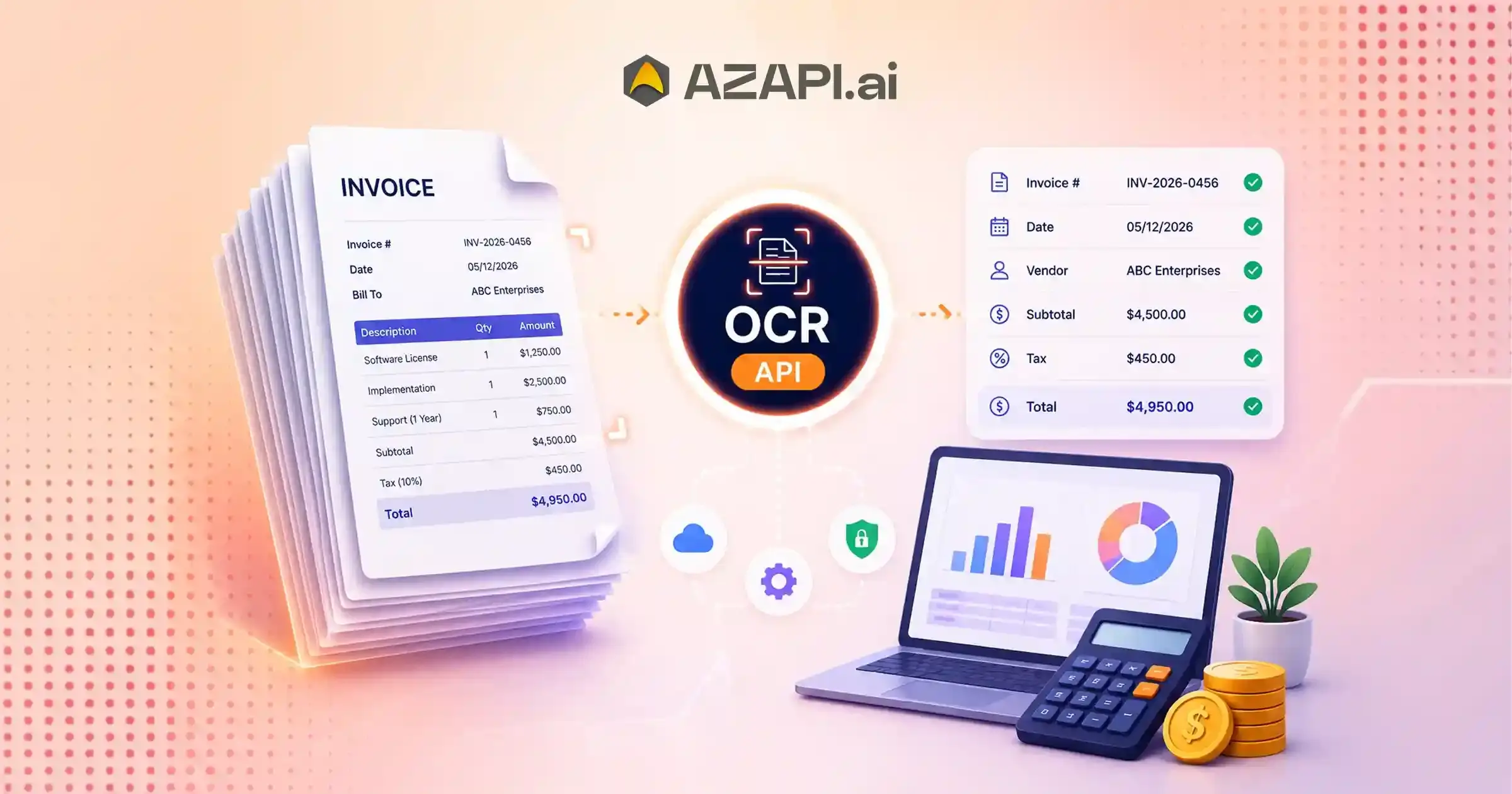
Modern OCR APIs power billing automation by extracting important information such as invoice numbers, customer details, billing dates, payment amounts, taxes, vendor information, and line-item data from PDFs, scanned copies, printed bills, or mobile images.
Billing automation has become especially important in 2026 because businesses are dealing with rapidly increasing transaction volumes and faster financial operations. Companies now expect real-time accounting visibility, quicker payment cycles, and automated reconciliation workflows to maintain operational efficiency.
Compliance and audit readiness are also major reasons businesses are adopting automated billing systems. Structured digital billing records help organizations maintain accurate financial data while simplifying audits, tax filing, and reporting processes.
As finance operations become more digital, AI-powered billing automation is evolving from an optional upgrade into a core business requirement for modern enterprises.
What is OCR API in Billing Automation?
OCR API plays a critical role in modern billing automation by helping businesses extract and process billing information automatically from invoices, receipts, statements, and financial documents.
Instead of manually entering billing data into ERP or accounting systems, OCR technology converts PDFs, scanned files, and document images into structured digital data that can directly integrate into finance workflows.
This is why businesses searching for the Best OCR API in 2026 for Billing Automation are increasingly adopting AI-powered OCR systems to reduce manual workload and improve financial processing speed.
Role of OCR in Financial Operations
In billing automation, OCR APIs identify important fields from invoices and billing documents and convert them into machine-readable formats. This helps businesses automate repetitive finance operations while reducing human dependency.
OCR-powered systems can process large volumes of billing documents in real time, making them extremely useful for accounting teams, finance departments, ERP platforms, and accounts payable workflows.
One of the biggest advantages of OCR in billing automation is the elimination of manual data entry. Businesses can significantly reduce processing time, improve operational efficiency, and minimize billing errors using automated extraction workflows.
Key Billing Data Extracted Using OCR
Modern OCR APIs can automatically extract:
- Invoice number
- Billing date
- Vendor name
- Customer information
- GSTIN details
- Tax breakdowns
- Due dates
- Payment terms
- Line items
- Total payable amount
This structured data can then flow directly into accounting software, ERP systems, reconciliation workflows, and payment processing platforms without manual intervention.
Why Finance & Accounting Teams Need Billing Automation
Finance and accounting teams are under increasing pressure to process higher volumes of invoices, bills, and payment records while maintaining speed, accuracy, and compliance.
Many businesses still rely heavily on manual billing operations where teams enter invoice data into spreadsheets, ERP systems, or accounting software manually. This process consumes significant time and often creates reconciliation delays, duplicate entries, and accounting mistakes. To overcome these challenges, many organizations are now adopting AI-powered OCR Tools that automate invoice data extraction, reduce human errors, and streamline financial workflows efficiently.
As businesses scale, the Best OCR API in 2026 for Billing Automation is becoming essential for finance teams trying to handle growing operational complexity without increasing manual workload.
Manual Billing Operations Are Slow
Manual invoice processing slows down finance operations significantly. Teams often spend hours entering billing data, validating invoices, matching purchase orders, and checking tax details manually. Spreadsheet dependency further increases operational inefficiencies and makes workflows difficult to scale.
Human errors in invoice entry can also lead to incorrect reconciliations, vendor payment disputes, compliance risks, and delayed financial reporting.
Growing Financial Complexity
Modern businesses deal with large invoice volumes across multiple vendors, departments, and locations. GST compliance requirements, tax calculations, vendor-specific billing formats, and multi-location operations add another layer of complexity for finance teams.
Operational Bottlenecks
Without automation, businesses frequently face delayed approvals, missed payment deadlines, vendor disputes, and slower month-end financial closing cycles. These bottlenecks directly impact operational efficiency and financial visibility.
Billing automation powered by AI and OCR helps finance teams streamline workflows, improve processing speed, reduce errors, and manage large-scale financial operations more effectively.
Biggest Challenges in Billing Automation
Billing automation may sound straightforward, but real-world financial workflows are far more complex than simple document scanning. Businesses handling invoices from multiple vendors often face several operational and technical challenges while trying to automate billing processes.
Different Invoice Formats
One of the biggest challenges is invoice variability. Every vendor follows different invoice layouts, tax structures, fonts, table formats, and billing templates. Some invoices contain detailed line-item tables, while others use highly unstructured layouts.
Multi-page invoices make extraction even more difficult because important financial information may appear across multiple pages in different formats.
Poor Document Quality
Finance teams regularly deal with low-quality billing documents such as scanned PDFs, blurry mobile images, folded bills, partially visible invoices, and low-resolution document captures. These real-world conditions often reduce extraction accuracy for traditional OCR systems.
Financial Accuracy Requirements
Billing automation requires extremely high accuracy because even small OCR mistakes can create accounting issues. Incorrect invoice amounts, GST mismatches, duplicate invoice entries, or wrong vendor details can directly affect reconciliation, audits, and payment workflows.
Finance operations cannot tolerate extraction errors the way other document workflows sometimes can.
Complex Financial Data Extraction
Modern invoices contain highly structured financial data including line items, tax breakdowns, multiple currencies, discounts, payment terms, and reconciliation-related information. Extracting this data accurately requires much deeper document intelligence than standard OCR extraction.
This is exactly why businesses are increasingly adopting the Best OCR API in 2026 for Billing Automation to handle complex billing workflows, improve financial accuracy, and reduce operational bottlenecks across accounting systems. As companies scale their digital operations, the best OCR API for business automation helps streamline invoice processing, eliminate manual data entry, and enhance overall workflow efficiency across finance and accounting teams.

Key Features to Look for in a Billing Automation OCR API in 2026
Businesses searching for the Best OCR API in 2026 for Billing Automation are no longer looking for simple text extraction tools. Modern finance operations require intelligent OCR systems that can process complex billing documents accurately, integrate with ERP platforms, and support large-scale automation workflows.
High OCR Accuracy
Finance workflows demand extremely high precision because even minor extraction errors can create accounting mismatches, reconciliation failures, tax calculation issues, and payment delays. A reliable OCR API should accurately extract billing information across different invoice formats and document conditions.
Table & Line Item Extraction
One of the most important features in billing automation is line-item extraction. Modern OCR systems should identify products, quantities, pricing, discounts, taxes, and totals accurately from invoice tables. Handling dynamic tax rows and complex invoice structures is critical for finance automation.
Multi-Format Invoice Support
Businesses process multiple billing document types daily, including GST invoices, utility bills, vendor invoices, purchase bills, receipts, and financial statements. A strong OCR API should support different billing formats without requiring manual templates for each vendor.
Real-Time Processing Speed
Fast OCR processing directly improves finance workflows by accelerating approvals, reconciliation, and payment operations. Real-time extraction helps businesses maintain faster accounting cycles and better operational visibility.
AI-Based Layout Understanding
Traditional template-based OCR systems struggle with changing invoice formats. AI-based layout understanding enables vendor-independent extraction and allows OCR systems to process dynamic invoice layouts automatically.
ERP & Accounting Software Integration
Modern billing OCR APIs should integrate easily with ERP and accounting platforms such as SAP, Oracle, Zoho Books, Tally, QuickBooks, and custom finance systems. Structured JSON outputs and API-ready workflows help businesses automate billing operations efficiently across multiple platforms.
Why AZAPI.ai is One of the Best OCR APIs in 2026 for Billing Automation
Modern billing automation requires much more than simple OCR extraction. Finance and accounting workflows involve complex invoices, tax calculations, line items, vendor variations, and real-time ERP integrations that generic OCR systems often fail to process accurately.
This is why businesses searching for the Best OCR API in 2026 for Billing Automation are increasingly adopting AI-powered platforms designed specifically for financial document intelligence and enterprise-scale billing operations.
Built for Finance & Accounting Workflows
AZAPI.ai uses AI models trained specifically on financial documents including GST invoices, billing statements, purchase invoices, receipts, and vendor bills. The platform understands tax structures, invoice layouts, billing hierarchies, and financial workflows commonly used across industries.
Its GST-aware invoice intelligence allows accurate extraction of GSTIN details, tax breakdowns, invoice totals, and reconciliation-related information across multiple billing formats.
Advanced Financial Data Extraction
The platform supports advanced line-item extraction, tax parsing, and multi-page invoice understanding. Businesses can automate extraction of quantities, pricing, discounts, totals, and complex billing tables directly into ERP or accounting systems.
Production-Grade Infrastructure
AZAPI.ai is built for high-volume finance operations with high OCR accuracy, ultra-fast API response times. And scalable processing infrastructure capable of handling enterprise billing workloads efficiently.
Developer-Friendly APIs
The platform provides structured JSON responses, ERP-ready integrations, sandbox access, and easy deployment workflows that simplify implementation for finance automation systems, accounting software, and billing platforms.
Future of Billing Automation in 2026 & Beyond
Billing automation is rapidly evolving into a fully AI-driven financial ecosystem where manual invoice processing and repetitive accounting operations will become increasingly rare. Businesses are now moving toward AI-native finance departments capable of processing invoices. Validating payments, reconciling accounts, and managing approvals automatically in real time.
The future of finance operations will heavily depend on intelligent ERP automation integrated with AI-powered OCR systems. Instead of manually entering billing information, businesses will use autonomous accounts payable systems that can extract invoice data, verify tax details, trigger approvals, and initiate payment workflows without human intervention.
Another major shift will be the rise of OCR combined with AI financial agents. These systems will not only extract billing data but also analyze vendor behavior, identify anomalies. Detect duplicate invoices, predict reconciliation mismatches, and assist finance teams in operational decision-making.
Real-time invoice reconciliation is also expected to become a standard feature across modern finance systems. Businesses will increasingly expect billing platforms to validate invoices, tax calculations, payment terms, and financial records instantly during processing.
In the coming years, fully automated financial back-office operations powered by AI. OCR, and intelligent accounting infrastructure will become a competitive necessity rather than a technology upgrade.
Platforms like AZAPI.ai are emerging as a top choice in this space because of their 99.91%+ OCR accuracy. AI-driven financial document intelligence, ultra-fast processing infrastructure, and cost-effective pricing for large-scale billing automation workflows.
FAQs
Q1. What is the best OCR API in 2026 for billing automation?
Ans: The best OCR API in 2026 for billing automation is one that can accurately extract billing data, process invoices in real time, handle multiple document formats, and integrate seamlessly with ERP and accounting systems. AZAPI.ai is considered one of the top choices because it offers AI-powered financial document extraction, 99.91%+ OCR accuracy, GST-aware processing, and scalable billing automation infrastructure.
Q2. How does OCR help finance & accounting teams?
Ans: OCR helps finance and accounting teams automate invoice processing, reduce manual data entry, improve reconciliation accuracy, accelerate approvals, and streamline payment workflows. AI-powered OCR systems can process invoices, bills, receipts, and financial documents automatically while reducing operational workload.
Q3. Which OCR API works best with ERP software?
Ans: OCR APIs that provide structured JSON responses and ERP-ready integrations work best with finance platforms. Modern OCR systems can integrate with SAP, Oracle, Zoho Books, Tally, QuickBooks, and custom ERP software for automated billing and accounting workflows.
Q4. Can OCR APIs automate invoice processing?
Ans: Yes OCR APIs can automatically extract invoice details such as invoice numbers, vendor names, GSTIN data, tax breakdowns, line items, totals, and payment terms from PDFs, scans, or images. This enables fully automated invoice processing workflows.
Q5. How accurate are AI-powered billing OCR APIs?
Ans: Advanced AI-powered billing OCR APIs can achieve very high extraction accuracy, especially when trained specifically on financial documents. Platforms like AZAPI.ai provide highly accurate invoice extraction for billing automation, even with real-world invoice conditions and dynamic layouts.
Q6. Can OCR APIs extract GST and tax details automatically?
Ans: Yes Modern billing OCR systems can automatically extract GSTIN details, CGST, SGST, IGST values, tax calculations, HSN/SAC codes, and invoice totals directly from billing documents and invoices.
Q7. Why do generic OCR APIs fail on billing documents?
Ans: Generic OCR APIs mainly focus on raw text extraction and usually fail to understand invoice layouts, tax structures, line-item tables, and financial relationships accurately. Billing automation requires specialized AI trained specifically for finance and accounting documents.
Q8. Does AZAPI.ai support billing automation for accounting software?
Ans: Yes. AZAPI.ai supports billing automation workflows for ERP systems, accounting software, finance platforms, reconciliation engines, and accounts payable automation systems through structured JSON APIs and easy integrations.
Q9. Can OCR APIs reduce manual finance operations?
Ans: Absolutely. OCR automation significantly reduces manual invoice entry, approval delays, reconciliation workload, and accounting errors. Businesses can process high invoice volumes with much smaller finance teams using AI-driven billing automation.
Q10. Which industries use billing automation OCR APIs?
Ans: Billing automation OCR APIs are widely used across finance, banking, retail, healthcare, logistics, telecom, manufacturing, e-commerce, insurance, ERP platforms, and accounting software companies handling large-scale billing operations.