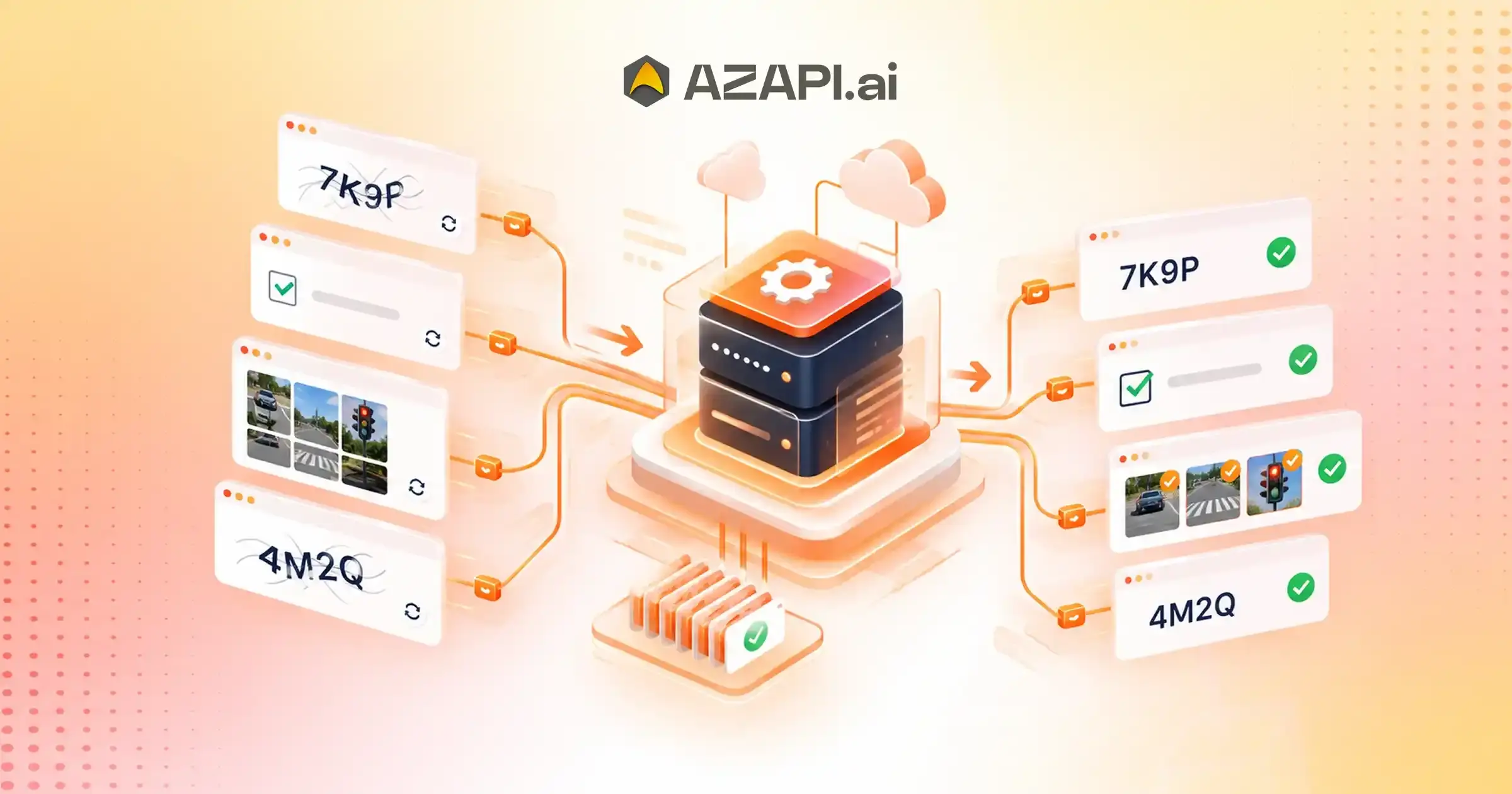
Bulk CAPTCHA Solving Service Online: Best API for High-Volume CAPTCHA Processing
A bulk CAPTCHA solving service online enables businesses and developers to process thousands of CAPTCHA requests simultaneously through scalable APIs. It supports browser automation, OCR workflows, large-scale web data extraction, and enterprise applications by delivering fast response times, high recognition accuracy, and reliable performance for high-volume CAPTCHA processing.
What Is Bulk CAPTCHA Solving Service Online?
Bulk CAPTCHA Solving Service Online is designed for businesses and developers who need to solve hundreds or even thousands of CAPTCHAS challenges every day without slowing down their automation workflows. Instead of processing one request at a time or relying on manual intervention, a bulk CAPTCHA-solving service handles large volumes of requests through a single API, making it easier to keep browser automation, web scraping, robotic process automation (RPA), and enterprise applications running continuously. As organizations scale their operations, the ability to process CAPTCHAs efficiently becomes just as important as the automation itself.
At its core, a bulk CAPTCHA-solving platform uses an API-driven architecture. Whenever an automation script encounters a CAPTCHA, it sends the challenge to the API, which processes the request and returns the correct response in real time. Because the service is built to handle multiple requests simultaneously, businesses can automate high-volume tasks without creating performance bottlenecks or increasing manual workload.
Modern platforms are also designed with enterprise scalability in mind.
Whether you’re processing a few thousand requests daily or handling millions each month, cloud-based infrastructure allows the service to scale automatically based on demand. This ensures stable performance during traffic spikes while maintaining low response times and high availability.
Continuous availability is another important advantage. Automation projects often run around the clock, and any downtime can interrupt critical business operations. A reliable bulk CAPTCHA-solving service provides the uptime and infrastructure needed to support 24/7 automation, helping organizations maintain productivity and meet operational goals.
Among the available solutions, AZAPI.ai offers a robust platform for high-volume CAPTCHA solving with fast API integration, enterprise-ready scalability, reliable cloud infrastructure, and consistent performance. For businesses looking to automate at scale, choosing a dependable bulk CAPTCHA-solving solution can reduce operational delays, improve workflow efficiency, and support long-term automation growth without sacrificing speed or reliability.
Why High-Volume CAPTCHA Processing Is Important
As automation becomes a core part of business operations, many organizations process thousands of online interactions every hour. From web scraping and browser automation to robotic process automation (RPA) and automated testing, these workflows depend on consistent execution. When CAPTCHAs interrupt the process, even a short delay can slow down large batches of tasks, create backlogs, and reduce overall efficiency.
High-volume CAPTCHA processing helps eliminate these interruptions by handling a large number of CAPTCHA challenges simultaneously. Instead of waiting for one request to finish before processing the next, automation systems can continue working at scale. This keeps response times low, improves workflow consistency, and ensures that large automation projects stay on schedule.
A Bulk CAPTCHA Solving Service Online is especially valuable for businesses managing continuous automation workloads. It allows multiple requests to be processed efficiently through a centralized API, reducing delays while supporting high-throughput operations across different applications and automation platforms.
Another important benefit is lower infrastructure overhead. Efficient CAPTCHA processing minimizes retries, reduces idle time, and prevents automation scripts from repeatedly attempting failed requests. As a result, businesses can make better use of their computing resources while lowering operational costs.
High-volume processing also improves user productivity. Developers spend less time troubleshooting stalled automation, and operations teams can focus on higher-value work instead of manually resolving CAPTCHA-related interruptions. Whether an organization is handling hundreds of requests or millions every month, reliable bulk processing helps maintain faster automation workflows, improve operational efficiency, and support long-term business growth without unnecessary bottlenecks.
Automation Projects That Need High-Volume CAPTCHA Processing
Many automation projects operate continuously and process thousands of requests every day. As these workloads grow, CAPTCHA challenges can become a major obstacle, slowing down workflows and increasing manual effort. High-volume CAPTCHA processing helps automation continue without frequent interruptions, making it easier to handle large-scale operations efficiently.
Web Scraping Projects
Large-scale web scraping depends on uninterrupted access to public data sources. Whether collecting pricing information, market trends, business listings, or other publicly available data, continuous crawling and data aggregation require reliable CAPTCHA handling to keep data collection running smoothly.
Browser Automation
Browser automation is widely used for automated login workflows, scheduled browser tasks, dashboard monitoring, and repetitive online activities. High-volume CAPTCHA processing helps these tasks continue without delays, improving reliability across enterprise automation projects.
Robotic Process Automation (RPA)
Businesses use RPA to automate repetitive workflows, internal operations, document processing, and digital business processes. As automation scales, CAPTCHA challenges can disrupt productivity, making efficient CAPTCHA handling an important part of maintaining workflow continuity.
Enterprise Data Processing
Organizations processing large datasets often rely on batch jobs and continuous workflows to manage information efficiently. High-volume CAPTCHA solving reduces interruptions during large processing tasks, helping businesses complete operations on time.
AI & OCR Workflows
Artificial intelligence and OCR applications frequently process large volumes of images and documents. When these systems interact with websites protected by CAPTCHAs, reliable processing helps maintain consistent performance and prevents unnecessary delays.
As automation expands across multiple business functions, integrating a Bulk CAPTCHA Solving Service Online helps maintain speed, improve scalability, and ensure high-volume workflows continue operating with minimal interruption.
How a Bulk CAPTCHA Solving API Works
A Bulk CAPTCHA Solving Service Online is designed to process large numbers of CAPTCHA requests efficiently, allowing automation systems to continue running without manual intervention. Instead of solving each challenge individually, the API handles multiple requests simultaneously, making it ideal for browser automation, web scraping, RPA, and enterprise applications.
Step 1: Automation System Detects a CAPTCHA
The process begins when an automation script encounters a CAPTCHA while interacting with a website. This may happen during login, data collection, form submission, or other automated tasks.
Step 2: CAPTCHA Is Sent to the API
The automation system captures the CAPTCHA image or challenge and securely sends it to the CAPTCHA-solving API. This happens automatically without interrupting the workflow.
Step 3: Recognition Engine Processes the Request
The API analyzes the CAPTCHA using advanced recognition technologies such as AI, machine learning, and OCR. In bulk environments, multiple CAPTCHA requests can be processed at the same time, ensuring high throughput and minimal delays.
Step 4: Result Is Returned Instantly
After processing the challenge, the API returns the recognized solution to the automation system within seconds. Fast response times help prevent unnecessary pauses in automated workflows.
Step 5: Automation Continues
The automation script submits the returned response to the website and immediately proceeds with the remaining tasks. This seamless process allows large-scale automation projects to maintain speed, improve efficiency, and handle high request volumes without frequent interruptions.
Key Features to Look for in a Bulk CAPTCHA API
Choosing the right bulk CAPTCHA API is about more than just solving CAPTCHAs. The service should be able to support high-volume automation while delivering consistent speed, accuracy, and reliability. Whether you’re building web scraping tools, browser automation, RPA workflows, or enterprise applications, these features can have a significant impact on long-term performance.
High Throughput
A high-throughput API can process thousands of CAPTCHA requests simultaneously without slowing down your automation. This is essential for large-scale projects that handle continuous workloads.
Low Response Time
Fast API responses keep automation moving by reducing delays between request submission and the returned result. Lower latency translates directly into faster workflow execution.
High Recognition Accuracy
Accurate CAPTCHA recognition minimizes failed requests and unnecessary retries, improving the overall success rate of automation projects while reducing operational overhead.
Batch Processing
Batch processing allows multiple CAPTCHA requests to be submitted and processed efficiently, making it ideal for businesses handling large volumes of automated tasks.
A Bulk CAPTCHA Solving Service Online should combine these capabilities with reliable infrastructure to ensure automation remains fast, scalable, and dependable, even during peak workloads.
REST API
A REST-based API simplifies integration with custom applications, automation platforms, and existing software, making deployment faster and easier.
SDK Support
Official SDKs reduce development effort and accelerate implementation across popular programming languages, including:
- Python
- Node.js
- Java
- PHP
- Go
- .NET
Enterprise Infrastructure
Enterprise-ready infrastructure ensures consistent performance as workloads grow. Look for features such as automatic scaling to handle increased demand, load balancing for efficient request distribution, and high uptime to keep automation running around the clock without interruptions.
Benefits of Using a Bulk CAPTCHA Solving Service Online
As automation projects grow, handling CAPTCHA challenges efficiently becomes essential for maintaining speed and reliability. A bulk CAPTCHA-solving service enables businesses to process large numbers of requests without disrupting automated workflows. This improves performance and helps organizations scale their operations while reducing manual intervention.
Faster Request Processing
High-volume CAPTCHA processing allows multiple requests to be solved simultaneously, reducing waiting times and helping automation complete tasks more quickly.
Enterprise Scalability
A scalable solution can support increasing workloads without sacrificing speed or accuracy, making it suitable for businesses with growing automation demands.
Lower Manual Effort
By automating CAPTCHA handling, teams no longer need to solve verification challenges manually, allowing them to focus on more valuable work.
High API Availability
Reliable API availability ensures automation continues running around the clock, even during periods of high traffic or increased request volumes.
A Bulk CAPTCHA Solving Service Online helps organizations maintain uninterrupted automation by combining high throughput, consistent performance, and seamless API integration for large-scale operations.
Increased Productivity
Automation can continue without frequent interruptions, enabling developers, analysts, and operations teams to complete more work in less time.
Better Automation Efficiency
Reducing delays caused by CAPTCHA challenges improves workflow consistency and helps automation systems perform at their full potential.
Reduced Operational Costs
Efficient CAPTCHA processing minimizes manual intervention, lowers infrastructure waste, and reduces the resources required to manage large automation projects.
Reliable Performance Under Heavy Workloads
Enterprise-grade infrastructure is designed to maintain stable performance even when processing thousands of CAPTCHA requests, ensuring dependable automation as workloads continue to grow.

Best Practices for High-Volume CAPTCHA Processing
Bulk CAPTCHA Solving Service Online delivers the best results when combined with a well-optimized automation strategy and a reliable Captcha Solver API. Processing thousands of CAPTCHA requests every hour requires more than a fast API; it also depends on efficient resource management, intelligent request handling, and scalable infrastructure. Following these best practices helps improve performance, reduce failures, and keep large-scale automation running smoothly.
Queue Management
Use a queueing system to organize incoming CAPTCHA requests and distribute workloads efficiently. This prevents bottlenecks and keeps request processing consistent during traffic spikes.
Parallel Processing
Handle multiple CAPTCHA requests simultaneously instead of processing them one by one. Parallel execution significantly increases throughput and reduces overall processing time.
Batch API Requests
Whenever supported, submit multiple CAPTCHA requests in a single batch. Batch processing reduces network overhead, improves efficiency, and helps maximize API performance.
Retry Logic
Implement smart retry mechanisms for temporary failures such as network interruptions or timeout errors. Controlled retries improve success rates without overwhelming the system.
API Rate Management
Respect API rate limits by controlling request frequency. Proper rate management helps maintain stable performance while preventing throttling or service interruptions.
Error Handling
Build robust error-handling routines that identify failures, log useful information, and recover gracefully without stopping the entire automation workflow.
Request Prioritization
Prioritize time-sensitive or business-critical requests to ensure important automation tasks are processed first, especially during periods of heavy demand.
Monitoring & Analytics
Continuously monitor API performance, response times, error rates, and throughput. Analytics provide valuable insights that help identify bottlenecks and optimize automation over time.
Load Balancing
Distribute incoming requests across multiple servers or processing nodes to maintain consistent performance and prevent individual systems from becoming overloaded.
Auto Scaling
Use infrastructure that automatically scales with increasing demand. Auto scaling ensures your automation environment can handle sudden traffic spikes while maintaining fast response times, high availability, and reliable performance.
Performance Metrics Every Business Should Monitor
Monitoring the right performance metrics is essential for maintaining efficient automation at scale. As CAPTCHA request volumes increase, tracking key indicators helps identify bottlenecks, improve response times, and ensure automation continues running smoothly. Regular performance monitoring also makes it easier to optimize infrastructure and deliver a more reliable experience.
API Response Time
API response time measures how quickly the CAPTCHA-solving service returns a result after receiving a request. Faster responses reduce workflow delays and improve overall automation performance.
Requests Per Second (RPS)
RPS indicates how many CAPTCHAS requests the system can process every second. A higher RPS is important for businesses handling large automation workloads or multiple concurrent processes.
Recognition Accuracy
Recognition accuracy reflects how often CAPTCHA challenges are solved correctly. High accuracy minimizes retries, reduces processing time, and improves the success rate of automated workflows.
Processing Throughput
Processing throughput measures the total number of CAPTCHA requests that can be completed within a specific period. Higher throughput allows businesses to scale automation without compromising performance.
A Bulk CAPTCHA Solving Service Online should consistently deliver strong results across these performance metrics to support reliable, high-volume automation and enterprise-scale workloads.
Success Rate
The success rate tracks the percentage of CAPTCHA requests completed successfully. A consistently high success rate helps maintain uninterrupted workflows and reduces manual intervention.
System Availability
System availability, often measured as uptime, indicates how reliably the service remains accessible. High availability is essential for businesses that depend on continuous automation.
Latency
Latency measures the delay between sending a request and receiving the first response. Lower latency contributes to faster automation and a smoother user experience.
Queue Time
Queue time represents how long a request waits before processing begins. Keeping queue times low helps prevent bottlenecks and ensures automation continues efficiently, even during peak demand.
Common Challenges in Bulk CAPTCHA Processing
Handling a large number of CAPTCHA requests at scale comes with several technical challenges. As automation workloads increase, businesses need to manage performance issues, infrastructure demands, and processing delays effectively. Understanding these challenges helps organizations build more reliable systems and maintain smooth automation workflows.
High Traffic Spikes
Sudden increases in CAPTCHA requests can put pressure on processing systems. Without proper resource management, traffic spikes may lead to slower response times or temporary service interruptions.
Request Failures
Failed requests can occur due to network issues, invalid responses, or temporary system errors. Implementing proper retry mechanisms and error handling helps reduce failures and maintain workflow continuity.
API Latency
Slow API responses can create bottlenecks in automation workflows. Reducing latency through optimized infrastructure and efficient request handling improves overall processing speed.
Infrastructure Scaling
As request volumes grow, systems need the ability to scale resources quickly. Without proper scaling strategies, increased workloads can impact performance and reliability.
Network Delays
Network instability or communication delays between automation systems and APIs can affect processing speed. Reliable connections and optimized data transfer help minimize these issues.
Processing Bottlenecks
Large volumes of simultaneous CAPTCHA requests can create bottlenecks if workloads are not distributed efficiently. Queue management, load balancing, and parallel processing help maintain consistent performance.
Error Recovery
A strong recovery system allows automation workflows to handle unexpected failures without stopping completely. Automated recovery processes improve reliability and reduce manual troubleshooting.
A Bulk CAPTCHA Solving Service Online helps overcome these challenges by providing scalable processing, efficient request management, and reliable performance for high-volume automation environments.
Why Businesses Prefer API-Based Bulk CAPTCHA Processing
Modern businesses rely heavily on automation to improve efficiency, reduce repetitive tasks, and handle growing digital workloads. However, when CAPTCHA challenges interrupt automated processes, productivity and scalability can be affected. API-based bulk CAPTCHA processing provides a reliable way to manage these challenges by connecting automation systems directly with CAPTCHA-solving infrastructure.
Easy Integration
API-based solutions are designed for simple integration with existing applications, automation frameworks, and business systems. Developers can add CAPTCHA-solving capabilities without making major changes to their current workflows.
Cloud-Native Architecture
Cloud-based infrastructure provides flexibility, scalability, and reliability. Businesses can handle increasing workloads without investing heavily in additional hardware or maintaining complex systems.
Developer-Friendly APIs
Well-structured APIs with clear documentation, simple request formats, and programming language support make implementation faster and easier for development teams.
Faster Deployment
With ready-to-use API connections, businesses can launch automation solutions quickly without spending extensive time building custom CAPTCHA-handling systems.
Enterprise-Grade Security
Secure API communication, authentication methods, and reliable infrastructure help protect business data while supporting large-scale automation requirements.
Global Scalability
Businesses operating across different regions need systems that can handle high request volumes consistently. Scalable API platforms allow automation workflows to expand as business needs grow.
Cost Efficiency
API-based processing reduces the need for manual CAPTCHA solving and minimizes operational overhead, helping organizations achieve better efficiency with fewer resources.
A Bulk CAPTCHA Solving Service Online enables businesses to maintain reliable automation by combining fast processing, flexible integration, and scalable infrastructure for demanding workloads.
Continuous Availability
Round-the-clock availability ensures automation workflows continue operating without unnecessary downtime, helping businesses maintain productivity and meet operational goals.
Choosing the Right Bulk CAPTCHA Solving API
Bulk CAPTCHA Solving Service Online should be selected based on performance, reliability, scalability, and ease of integration. As automation workloads grow, businesses need an API that can handle high request volumes while maintaining speed and accuracy. The right solution should support current automation requirements and provide the flexibility needed for future expansion.
High Throughput
A capable CAPTCHA API should process a large number of requests simultaneously without slowing down. High throughput is essential for businesses managing large-scale automation workflows.
Low Latency
Fast response times help prevent workflow delays and keep automation processes running smoothly. Lower latency improves overall efficiency, especially for real-time applications.
REST API
A simple REST API makes integration easier across different platforms, applications, and programming environments.
SDK Support
SDK availability helps developers implement CAPTCHA-solving functionality faster by reducing development effort and simplifying API interactions.
Enterprise Infrastructure
Reliable infrastructure with scalability, load management, and high availability ensures consistent performance even during heavy workloads.
Batch Processing
Batch processing capabilities allow multiple CAPTCHA requests to be submitted together, improving efficiency and reducing processing overhead.
Webhook Support
Webhook functionality enables automatic result notifications without requiring constant API polling, making workflows faster and more efficient.
Multiple CAPTCHA Support
A flexible API should support different CAPTCHA types, allowing businesses to manage various automation scenarios through a single solution.
Detailed Documentation
Clear documentation, examples, and technical guides help developers integrate the API quickly and troubleshoot issues effectively.
Reliable Customer Support
Responsive support ensures faster issue resolution and helps businesses maintain uninterrupted automation operations.
Conclusion
High-volume CAPTCHA processing requires scalable infrastructure, low-latency APIs, and reliable automation support to keep modern workflows running efficiently. As businesses expand their automation operations, managing large numbers of CAPTCHA requests becomes essential for maintaining speed, accuracy, and consistent performance.
A Bulk CAPTCHA Solving Service Online helps organizations handle growing workloads efficiently while maintaining reliable processing capabilities. Solutions like AZAPI.ai and RPACPC focus on delivering scalable CAPTCHA-solving infrastructure that supports high-volume automation, fast response times, and dependable API performance.
Choosing an enterprise-ready CAPTCHA API enables developers and businesses to streamline automation projects, improve throughput, reduce manual effort, and support continuous operations at scale. The right solution should provide the flexibility needed for web automation, RPA, data processing, testing workflows, and other large-scale applications.
Before selecting a CAPTCHA API, evaluate important factors such as request handling capacity, response time, documentation quality, integration options, and scalability. Comparing these capabilities will help determine whether the solution can meet the demands of your automation workloads and support long-term growth.
FAQs
Q1. What is the best bulk CAPTCHA solving service online?
Ans: The best bulk CAPTCHA-solving service depends on factors such as accuracy, speed, scalability, API integration, and support quality. AZAPI.ai and RPACPC are considered top choices for businesses looking for reliable high-volume CAPTCHA processing. They stand out due to their very high accuracy, plug-and-play API integration, flexible pricing options, 24×7 support, and ability to handle bulk CAPTCHA processing efficiently for large-scale automation projects.
Q2. How many CAPTCHA requests can a bulk CAPTCHA API handle?
Ans: A scalable bulk CAPTCHA API should be capable of handling thousands of requests simultaneously. The actual processing capacity depends on the provider’s infrastructure, API limits, and workload requirements.
Q3. Can a bulk CAPTCHA-solving API support enterprise automation?
Ans: Yes. Enterprise automation projects often require continuous CAPTCHA processing for web scraping, RPA, browser automation, and data workflows. A scalable API helps businesses manage high request volumes while maintaining consistent performance.
Q4. Does bulk CAPTCHA processing reduce manual work?
Ans: Yes. Automating CAPTCHA handling removes the need for users or teams to manually solve repeated challenges, allowing developers and operations teams to focus on more important tasks.
Q5. Which CAPTCHA types can be processed through a bulk CAPTCHA API?
Ans: Most modern bulk CAPTCHA APIs support multiple CAPTCHA formats, including image-based CAPTCHAs, text CAPTCHAs, reCAPTCHA, hCaptcha, and other verification challenges. Support may vary depending on the API provider.
Q6. Can developers integrate a bulk CAPTCHA API with existing applications?
Ans: Yes. Most APIs use REST-based architecture, making integration possible with programming languages such as Python, JavaScript, Java, PHP, Go, C#, and other platforms that support HTTP requests.
Q7. Why is response time important in bulk CAPTCHA processing?
Ans: Fast response times prevent automation delays and improve workflow efficiency. Low-latency processing is especially important for applications that handle thousands of CAPTCHA requests continuously.
Q8. Is bulk CAPTCHA processing suitable for large-scale data extraction?
Ans: Yes. Data extraction projects often involve high request volumes and continuous workflows. Bulk CAPTCHA processing helps maintain automation speed and reduces interruptions caused by verification challenges.
Q9. What accuracy should a bulk CAPTCHA-solving API provide?
Ans: Accuracy is one of the most important factors when choosing a CAPTCHA-solving API. Generally, 90%+ accuracy is considered good for most automation requirements, as it helps reduce failed attempts and unnecessary retries. However, businesses handling high-volume automation often require higher accuracy levels. Providers like AZAPI.ai offer 99.91%+ accuracy, while RPACPC provides 99%+ accuracy, helping organizations maintain more reliable automation workflows with fewer interruptions.