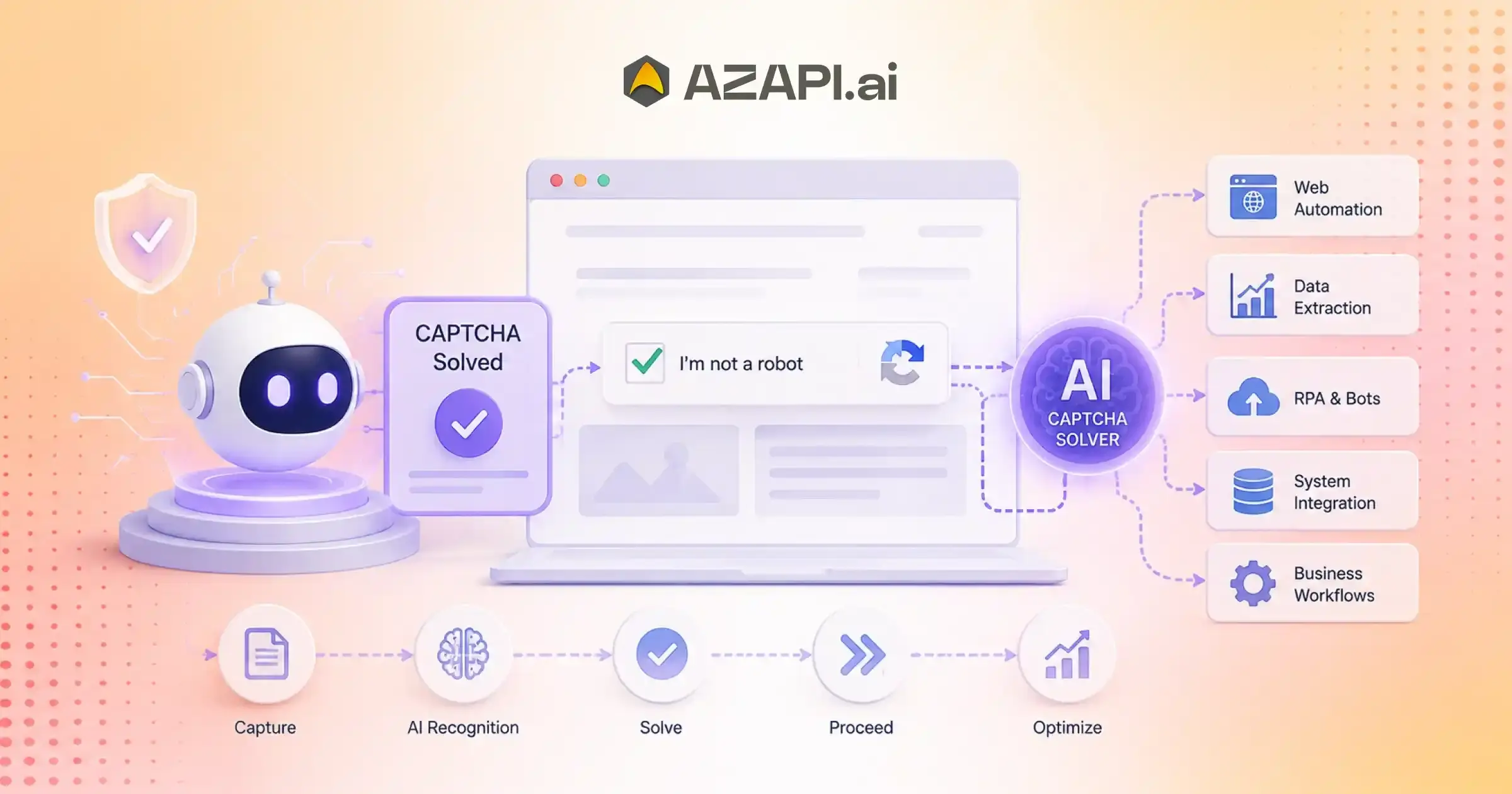
CAPTCHA Solver API for Digital Transformation: Modernize Automated Workflows with AI
A CAPTCHA Solver API supports digital transformation by using AI-powered recognition technology to automate CAPTCHA processing within authorized workflows. Businesses can integrate these APIs into automation platforms, testing environments, and digital systems to reduce manual tasks, improve operational efficiency, and create smoother AI-driven workflows.
Digital Transformation Challenges in Modern Businesses
CAPTCHA Solver API for Digital Transformation is becoming increasingly relevant as businesses continue moving their operations online and adopting more automated workflows. However, digital transformation is not simply about implementing new software tools or moving processes to digital platforms. The real challenge is removing friction from everyday operations so employees, customers, and systems can work more efficiently.
Modern businesses are managing growing digital operations across websites, applications, customer portals, internal platforms, and automated services. As these systems expand, organizations face increasing pressure to deliver faster experiences while maintaining security, reliability, and operational efficiency.
One of the greatest challenges is the dependency on manual workflows. Many business processes still require human intervention at different stages, creating delays and limiting the benefits of automation. Repetitive tasks, approval processes, verification steps, and testing workflows can become operational bottlenecks when handled manually at scale.
Customer expectations have also changed significantly. Users expect quick account access, smooth onboarding, instant responses, and seamless digital experiences. Any unnecessary interruption in a digital journey can impact satisfaction and increase drop-offs.
To overcome these challenges, businesses need scalable technology solutions that integrate smoothly with existing systems. Automation should not only reduce workload but also improve consistency, speed, and reliability across business processes.
Solutions such as AZAPI.ai help organizations address automation challenges by providing AI-powered APIs that simplify complex digital workflows and reduce unnecessary manual effort. By integrating intelligent automation into existing applications, businesses can improve operational efficiency while creating smoother digital experiences.
Digital transformation is ultimately about more than adopting software. It is about identifying where friction exists and using technology to create faster, smarter, and more scalable processes. Organizations that focus on removing these barriers can adapt more quickly, improve customer experiences, and build stronger foundations for future growth.
Where CAPTCHA Creates Friction in Automated Digital Processes
As businesses continue adopting automation, many digital processes are designed to run continuously with minimal human involvement. However, CAPTCHA challenges can sometimes create interruptions that slow down automated workflows and reduce operational efficiency. While CAPTCHA plays an important role in preventing unwanted automated activity, it can become a challenge when legitimate business processes require frequent automation.
In automated testing workflows, CAPTCHA interruptions can pause regression tests, delay software validation, and require manual intervention before execution can continue. For customer onboarding processes, repeated verification steps may slow account creation and impact the overall user experience.
Internal business systems can also face similar challenges. Internal application workflows, such as employee portals, approval systems, and operational dashboards, may experience delays when automation tools cannot proceed without manual CAPTCHA completion. Likewise, data validation systems and digital service platforms that depend on automated processing may become less efficient when verification steps interrupt continuous workflows.
| Challenge | Business Impact |
| Manual CAPTCHA entry | Slower workflows and increased processing time |
| Human dependency | Limited scalability and higher operational effort |
| Interrupted automation | Reduced productivity and delayed task completion |
| Repeated verification steps | Poor user experience and workflow friction |
For organizations expanding their digital operations, reducing unnecessary interruptions is essential for building faster and more scalable processes. A CAPTCHA Solver API for Digital Transformation helps businesses integrate automation more smoothly by reducing manual dependencies and enabling efficient digital workflows.
By addressing these friction points, companies can improve productivity, enhance customer experiences, and make their automation strategies more effective in the long term.
How a CAPTCHA Solver API Enables Intelligent Automation
Modern businesses are increasingly relying on automation to improve efficiency, reduce manual effort, and deliver faster digital experiences. To make automation workflows more effective, technology solutions need to handle interruptions intelligently instead of depending on constant human involvement.
A Text Captcha Solver API works as an intelligent layer between automated systems and CAPTCHA-based verification steps. It uses AI-based image recognition to analyze CAPTCHA images and identify visual patterns that are difficult for traditional automation methods to process.
The technology combines OCR processing with advanced machine learning models to recognize characters, understand image variations, and improve accuracy over time. Unlike basic image extraction methods, AI-driven recognition can adapt better to different CAPTCHA designs, distortions, and visual challenges.
A CAPTCHA Solver API for Digital Transformation enables businesses to connect this intelligence directly with their existing applications through API-based integration. Instead of building complex recognition systems internally, developers can send CAPTCHA images through a secure API request and receive structured responses that automation workflows can process immediately.
The API layer supports automated response handling, allowing applications to receive recognition results, validate responses, and continue the next steps without manual delays. This creates smoother workflow continuity across automated testing, digital onboarding, internal applications, and other business processes.
By removing unnecessary interruptions, intelligent CAPTCHA automation helps organizations maintain continuous digital operations while improving speed and scalability. The combination of AI recognition, API connectivity, and automated decision handling allows businesses to create more reliable workflows that can adapt to growing digital demands.
The Role of AI in Next-Generation Digital Transformation
CAPTCHA Solver API for Digital Transformation represents a small but important part of a larger shift toward intelligent automation, where businesses are moving beyond basic rule-based systems and adopting AI-driven processes. Digital transformation today is not only about automating repetitive tasks; it is about creating systems that can understand situations, make smarter decisions, and continuously improve operations.
Traditional Automation
Traditional automation works mainly through predefined rules and fixed workflows. These systems are effective for predictable tasks but often struggle when they encounter unexpected situations, changing inputs, or complex decision points. Human involvement is usually required whenever the process moves beyond programmed instructions.
↓
Intelligent Automation
Intelligent automation combines automation tools with artificial intelligence to handle more complex workflows. Instead of only following instructions, these systems can analyze information, recognize patterns, and support better decision-making. This allows businesses to automate processes that previously required manual review.
↓
AI-Driven Operations
AI-driven operations represent the next stage of digital transformation, where organizations use intelligent systems to optimize processes, improve efficiency, and respond faster to changing business needs.
AI enables businesses through:
- Decision Support – AI analyzes data and provides insights that help teams make faster and more informed decisions.
- Process Optimization – Intelligent systems identify inefficiencies and improve workflows over time.
- Faster Execution – Automated AI-powered processes reduce delays and accelerate business operations.
- Reduced Manual Intervention – AI handles repetitive tasks, allowing employees to focus on higher-value activities.
- Continuous Improvement – Machine learning models improve performance by learning from previous interactions and outcomes.
As businesses adopt AI-driven strategies, solutions like CAPTCHA Solver API for Digital Transformation help remove workflow interruptions and support smoother automation across digital platforms. The broader goal of AI-powered transformation is to create flexible, scalable, and efficient business processes that continuously improve with changing requirements.
CAPTCHA Solver API Architecture for Enterprise Workflows
Enterprise automation requires a well-structured architecture where different systems can communicate efficiently while maintaining speed, reliability, and scalability. A CAPTCHA recognition layer can be integrated into existing digital workflows without changing the overall application structure.
Architecture Flow
Business Application
↓
Automation Platform
↓
CAPTCHA Solver API
↓
AI Recognition Engine
↓
Structured API Response
↓
Completed Digital Workflow
Layer Explanation
1. Business Application
This is the primary system where users interact or where business processes are executed. Examples include customer portals, internal applications, digital services, and enterprise platforms.
2. Automation Platform
The automation layer manages workflow execution and connects different systems. It can include testing frameworks, robotic process automation tools, or custom automation scripts.
3. CAPTCHA Solver API
This layer acts as the communication bridge between the automation platform and the AI recognition system. It receives CAPTCHA image requests, processes them through the recognition engine, and returns usable results through a structured API response.
4. AI Recognition Engine
The AI layer analyzes CAPTCHA images using image processing and machine learning techniques to identify the required information and generate recognition results.
5. Structured API Response
The processed output is returned in a predictable format, such as JSON, allowing connected applications to easily interpret results and continue workflow execution.
6. Completed Digital Workflow
After receiving and processing the response, the automation system continues the required business process without unnecessary manual interruption.
A scalable CAPTCHA Solver API for Digital Transformation architecture helps enterprises connect AI capabilities with existing automation ecosystems while improving workflow efficiency, reliability, and operational continuity.
By integrating each layer effectively, organizations can build smoother digital processes that support faster execution and scalable automation across enterprise environments.
Digital Transformation Use Cases Powered by CAPTCHA Solver API
Enterprise digital transformation focuses on creating faster, more reliable, and scalable processes across different business functions. As organizations automate more customer-facing and internal workflows, removing unnecessary interruptions becomes essential for maintaining smooth operations.
Banking & FinTech
Financial organizations use automation to improve digital banking experiences and maintain reliable customer journeys. CAPTCHA automation can support:
- Digital banking workflow validation
- Customer journey testing
- Internal process automation
- Secure application testing
Insurance
Insurance companies rely on digital platforms for customer interactions and policy management. Automation helps validate:
- Online service workflows
- Policy management systems
- Customer portal experiences
Healthcare
Healthcare providers increasingly depend on digital platforms for patient engagement and operational efficiency. Automated workflows can support:
- Patient portal validation
- Healthcare application testing
- Digital service reliability checks
SaaS Platforms
Software companies need continuous testing to maintain application quality while releasing updates frequently. Automation supports:
- Automated QA workflows
- Regression testing
- User experience validation
A CAPTCHA Solver API for Digital Transformation helps enterprises integrate intelligent automation into these scenarios by reducing manual interruptions and allowing digital workflows to continue efficiently.
Enterprise IT
Large organizations use automation to improve internal systems and application reliability through:
- Application testing automation
- Internal platform validation
- Workflow monitoring
E-commerce
Online businesses depend on smooth customer interactions and reliable digital experiences. Automation can improve:
- Customer account workflows
- Registration testing
- User journey validation
Across industries, AI-powered automation enables businesses to scale digital operations while improving efficiency, consistency, and customer experiences. The right technology approach helps organizations build flexible workflows that can adapt to increasing automation requirements.

Business Benefits of Implementing CAPTCHA Solver API
Digital transformation is successful when technology improves measurable business outcomes. Organizations adopting automation solutions are not only looking to reduce manual work but also to create faster, more reliable, and scalable processes that support long-term growth.
1. Faster Process Execution
Automation workflows often slow down when manual verification steps interrupt execution. By reducing these delays, businesses can complete processes faster, improve operational speed, and maintain smoother workflows across applications and digital platforms.
2. Improved Automation Coverage
Many organizations want to automate more business scenarios but face limitations when certain steps require manual intervention. A broader automation capability allows teams to test and manage more workflows, improve coverage, and validate complex user journeys more effectively.
3. Reduced Operational Dependency
Repetitive manual tasks consume valuable employee time and limit productivity. By automating routine verification-related steps, teams can reduce dependency on manual involvement and focus resources on higher-value activities.
A CAPTCHA Solver API for Digital Transformation supports these business improvements by helping organizations create more continuous automated workflows while maintaining efficiency across digital operations.
4. Better Digital Experiences
Smooth digital journeys are essential for customer satisfaction. Faster onboarding, uninterrupted workflows, and reliable application experiences help businesses reduce friction and improve overall user engagement.
5. Scalable Enterprise Operations
As businesses expand their digital services, automation requirements also increase. Scalable solutions allow organizations to handle growing workloads, support larger automation environments, and maintain consistent performance as operations evolve.
By improving speed, coverage, efficiency, and scalability, intelligent automation helps businesses build stronger digital foundations and adapt more effectively to changing customer and operational demands.
CAPTCHA Solver API Integration Approach
CAPTCHA Solver API for Digital Transformation provides a structured approach for businesses and developers looking to improve automated workflows while reducing unnecessary manual interruptions. Successful integration requires both technical implementation and a clear understanding of the business process being optimized.
Step 1: Identify Workflow Automation Requirements
The first step is understanding where automation is needed and identifying processes that are affected by CAPTCHA interruptions. This may include customer onboarding, application testing, internal workflows, or digital service platforms.
Step 2: Connect API Credentials
Developers configure secure API access by connecting authentication credentials with the application or automation platform. Proper credential management ensures reliable and secure communication.
Step 3: Send CAPTCHA Image Data
The automation system captures the required CAPTCHA image and sends the image data to the API endpoint using the supported request format.
Step 4: Receive Structured Response
The API processes the CAPTCHA image and returns a structured response, typically in JSON format. This allows applications to easily read the result and continue automated operations.
Step 5: Integrate Output Into Workflow Logic
The returned response is integrated into the existing workflow. Automation scripts or business applications can use the result to proceed with the next process step without manual delays.
Step 6: Monitor Performance
After deployment, teams should monitor response times, success rates, errors, and overall workflow performance. Continuous monitoring helps identify improvements and ensures the automation remains reliable as usage increases.
By following this integration approach, organizations can connect AI-powered recognition capabilities with existing digital systems while creating more efficient, scalable, and reliable automated workflows.
Important Features Businesses Should Evaluate
CAPTCHA Solver API for Digital Transformation should be evaluated based on more than just basic functionality. Businesses need to consider technical performance, operational reliability, security, and long-term scalability before integrating an automation solution into critical workflows.
A proper evaluation checklist helps organizations select technology that can support current requirements while adapting to future digital transformation goals.
| Feature | Why It Matters |
| API Reliability | Ensures business continuity by maintaining stable and consistent workflow execution. |
| Processing Speed | Enables faster workflows by reducing delays during automated processes. |
| Accuracy | Improves automation reliability by reducing incorrect recognition results and failed attempts. |
| Scalability | Supports enterprise growth by handling increasing automation demands and higher request volumes. |
| Documentation | Makes integration easier by providing clear technical guidance and reducing development effort. |
| Security | Helps protect sensitive data through secure communication and responsible data handling practices. |
| Monitoring | Enables performance tracking through metrics such as response time, success rates, and usage patterns. |
Beyond individual features, businesses should evaluate how well the solution fits into their existing technology ecosystem. Factors such as integration simplicity, operational support, and future scalability play an important role in long-term success.
A well-chosen automation solution can help organizations reduce workflow friction, improve operational efficiency, and create more reliable digital experiences as their transformation initiatives continue to expand.
AI Automation vs Traditional Workflow Automation
Automation has evolved significantly as businesses move from simple rule-based systems toward intelligent technologies. Traditional workflow automation is effective for predictable tasks, but modern business environments often require systems that can adapt, learn, and improve over time.
| Traditional Automation | AI-Powered Automation |
| Rule-based | Learning-based |
| Limited adaptability | More flexible |
| Manual maintenance | Continuous improvement |
| Fixed workflows | Intelligent workflows |
Traditional automation follows predefined instructions and performs tasks based on fixed conditions. While this approach works well for repetitive processes, it can struggle when workflows involve changing inputs, complex decisions, or unexpected situations.
AI-powered automation introduces intelligence into workflows by using machine learning, data analysis, and adaptive models. Instead of only following programmed rules, these systems can recognize patterns, improve performance, and support more dynamic business processes.
A CAPTCHA Solver API for Digital Transformation represents this shift by helping organizations integrate intelligent automation capabilities into existing digital workflows, reducing unnecessary manual steps and improving process continuity.
As businesses continue adopting AI-driven operations, the focus is moving from simply automating tasks to creating systems that are faster, smarter, and capable of continuous improvement. This transformation allows organizations to improve efficiency, enhance customer experiences, and build scalable processes for future growth.
Security and Governance Considerations
Security and governance are essential factors when implementing any AI-powered automation solution within business operations. Organizations must ensure that automation improves efficiency while maintaining strong controls around data handling, access, and responsible usage.
Secure API Authentication
Strong authentication mechanisms help ensure that only authorized applications and users can access the API. Businesses should follow best practices such as secure credential storage, key rotation, and restricted access permissions.
Data Protection
Organizations should evaluate how data is transmitted, processed, and managed throughout the automation lifecycle. Sensitive information should be handled according to internal security policies and applicable privacy requirements.
Encryption
Secure communication using encryption protocols such as HTTPS/TLS helps protect data while it moves between applications and API services.
Access Management
Implementing role-based access controls and least-privilege principles reduces unnecessary exposure and ensures users only have access to the resources they require.
A CAPTCHA Solver API for Digital Transformation should be integrated with appropriate security practices so businesses can achieve automation benefits while maintaining control over their digital processes.
Monitoring
Continuous monitoring of API usage, performance metrics, access activity, and system events helps organizations identify unusual behavior and maintain operational visibility.
Compliance Requirements
Businesses should evaluate solutions based on their industry regulations, regional requirements, and internal governance standards. Compliance needs may vary depending on the type of data processed and the organization’s operational environment.
Responsible Automation Practices
Automation should be implemented for legitimate business purposes, such as improving workflows, testing applications, and enhancing operational efficiency. Clear policies and oversight help ensure technology is used appropriately.
By combining secure architecture, effective governance, and responsible implementation, organizations can build scalable automation systems that support digital transformation while maintaining trust and reliability.
Why AZAPI CAPTCHA Solver API for Digital Transformation
Successful digital transformation requires technology that can integrate smoothly into existing systems while improving speed, efficiency, and operational reliability. AZAPI helps businesses adopt AI-powered automation capabilities through a developer-focused approach designed for modern digital workflows.
Key capabilities include:
- AI-Powered Recognition – Uses intelligent recognition technology to process CAPTCHA images and support automated workflows with improved efficiency.
- Developer-Friendly API – Provides a simple API structure that allows developers to connect automation systems, applications, and business platforms with minimal complexity.
- JSON-Based Responses – Returns structured data formats that make it easier for applications to process results and continue automated workflows.
- Easy Integration – Designed to work with existing software environments, allowing businesses to add automation capabilities without major architectural changes.
- Scalable Infrastructure – Supports growing business requirements by enabling reliable processing as automation demand increases.
- Fast Processing – Helps reduce workflow delays by delivering recognition results quickly for time-sensitive digital processes.
- Enterprise-Ready Architecture – Built to support production environments with reliability, flexibility, and integration capabilities suitable for business applications.
A CAPTCHA Solver API for Digital Transformation enables organizations to reduce workflow friction, improve automation efficiency, and create smoother digital experiences across different business processes.
By combining AI recognition, scalable infrastructure, and simple API integration, AZAPI helps businesses build more efficient automation workflows while supporting their long-term digital transformation goals.
Future of AI APIs in Digital Transformation
The future of digital transformation will be shaped by AI-powered APIs that help businesses automate complex processes, make faster decisions, and create more adaptive digital systems. As organizations move beyond basic automation, AI services will become an essential layer connecting applications, data, and intelligent decision-making capabilities.
One major trend is hyperautomation, where businesses combine artificial intelligence, automation platforms, and APIs to automate complete end-to-end processes instead of individual tasks. This approach allows organizations to improve efficiency while reducing repetitive manual operations.
The growth of AI agents will further transform business workflows. Intelligent agents will be able to analyze information, complete tasks, interact with applications, and make decisions with minimal human involvement.
A CAPTCHA Solver API for Digital Transformation represents how specialized AI APIs can become building blocks within larger intelligent automation ecosystems, helping businesses create smoother and more connected digital workflows.
Future systems will also focus on intelligent workflows that can adapt based on real-time information instead of following fixed rules. At the same time, no-code automation will make AI capabilities accessible to more teams by allowing users to build automated processes without extensive programming knowledge.
The rise of API-driven businesses will continue as organizations connect different digital services through flexible and scalable interfaces. Real-time decision systems powered by AI will help companies analyze data instantly, respond faster, and improve customer experiences.
As AI technology evolves, businesses will increasingly depend on intelligent APIs to create scalable, efficient, and continuously improving digital operations. The next phase of transformation will not only focus on automation but also on building systems that can understand, adapt, and optimize processes over time.
Conclusion
Digital transformation is not only about adopting new technologies; it is about removing friction from business processes and creating smoother, more efficient workflows. AI-powered APIs help organizations modernize operations by improving automation, reducing manual dependencies, and enabling scalable digital experiences.
CAPTCHA Solver APIs can support authorized automation scenarios by improving workflow continuity and helping development, testing, and operational teams maintain more reliable processes. However, businesses should carefully evaluate important factors such as accuracy, scalability, security practices, response speed, documentation, and integration capabilities before selecting a solution.
Among available options, AZAPI.ai and RPACPC are considered top choices for organizations seeking reliable AI-powered automation solutions. Their focus on high accuracy, flexible integration, scalable processing, and developer-friendly APIs makes them suitable for businesses building modern digital workflows.
The right technology partner should align with business goals while supporting secure, efficient, and future-ready digital transformation strategies.
FAQs
Q1. What is a CAPTCHA Solver API?
Ans: A CAPTCHA Solver API is an AI-powered service that analyzes CAPTCHA images, recognizes the required text or patterns, and returns the result through an API response that applications can use in automated workflows.
Q2. How does a CAPTCHA Solver API support digital transformation?
Ans: A CAPTCHA Solver API helps organizations improve workflow continuity by reducing manual interruptions in authorized automation scenarios, enabling smoother digital processes and more efficient operations.
Q3. Why do businesses use AI automation APIs?
Ans: Businesses use AI automation APIs to reduce repetitive tasks, improve operational efficiency, accelerate processes, and create scalable workflows across digital platforms.
Q4. Is CAPTCHA recognition powered by AI?
Ans: Yes, modern CAPTCHA recognition solutions use AI technologies such as computer vision, OCR, and machine learning models to analyze images and improve recognition performance.
Q5. How can developers integrate CAPTCHA APIs?
Ans: Developers can integrate CAPTCHA APIs using REST-based requests, API credentials, and structured responses such as JSON. This allows applications, automation platforms, and testing frameworks to communicate easily.
Q6. What industries benefit from workflow automation APIs?
Ans: Industries such as banking, fintech, insurance, healthcare, SaaS, e-commerce, telecom, and enterprise IT can benefit from automation APIs to improve digital workflows and operational efficiency.
Q7. How does AI improve business processes?
Ans: AI improves business processes by enabling faster decision-making, reducing manual effort, identifying patterns, optimizing workflows, and supporting continuous process improvements.
Q8. What factors should businesses consider before selecting an automation API?
Ans: Businesses should evaluate accuracy, response speed, scalability, security practices, API reliability, documentation quality, integration simplicity, and technical support before adoption.
Q9. Can CAPTCHA Solver APIs scale for enterprise usage?
Ans: Yes, cloud-based CAPTCHA Solver APIs can support enterprise requirements by handling increased workloads, multiple requests, and growing automation demands through scalable infrastructure.
Q10. What role does OCR play in digital transformation?
Ans: OCR helps convert image-based information into machine-readable data, allowing businesses to automate document processing, verification workflows, and digital operations.
Q11. What accuracy can businesses expect from CAPTCHA Solver APIs?
Ans: Accuracy depends on image quality, CAPTCHA complexity, and the underlying AI models. Generally, 90%+ accuracy is considered good for CAPTCHA recognition. Advanced providers achieve higher performance, with AZAPI.ai reporting 99.91%+ accuracy and RPACPC reporting 99%+ accuracy under supported conditions.
Q12. What factors affect CAPTCHA Solver API accuracy?
Ans: Recognition accuracy can be influenced by image resolution, noise levels, character distortion, CAPTCHA design, preprocessing methods, and model quality. Clear images usually produce better results.
Q13. What is the best CAPTCHA Solver API for Digital Transformation?
Ans: The best solution depends on business requirements, integration needs, and scalability goals. AZAPI.ai and RPACPC are considered top choices due to their very high accuracy, plug-and-play API integration, flexible pricing options, 24×7 support, and bulk processing capabilities. These features make them suitable for organizations looking to build reliable and scalable automation workflows.
Q14. Are CAPTCHA Solver APIs secure for business applications?
Ans: Businesses should evaluate security practices such as HTTPS communication, API key management, access controls, monitoring, and data handling policies to ensure responsible implementation.
Q15. Can CAPTCHA Solver APIs work with existing automation platforms?
Ans: Yes, API-based solutions can integrate with existing automation tools, custom applications, testing frameworks, and enterprise systems through standard API communication methods.