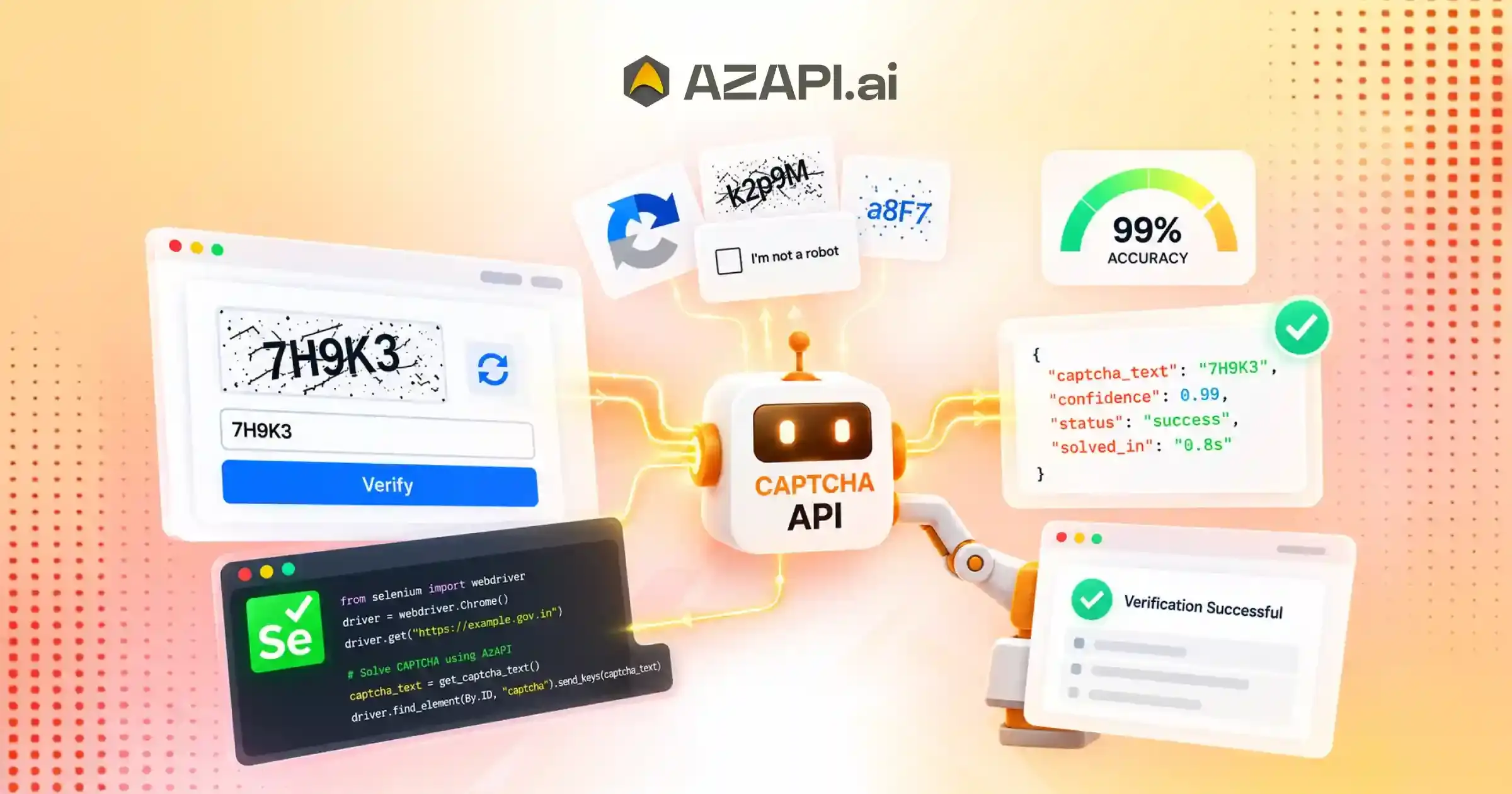
High-Accuracy CAPTCHA Solving API: Boost Performance in Automation Workflows
A high accuracy CAPTCHA solving API helps automation systems handle CAPTCHA challenges with improved recognition accuracy and fewer workflow interruptions. By integrating an accurate CAPTCHA processing solution, developers can improve browser automation, RPA workflows, testing systems, and data processing pipelines while reducing failures caused by incorrect CAPTCHA responses.
Why CAPTCHA Accuracy Impacts Automation Performance
High Accuracy CAPTCHA Solving API plays a critical role in improving the reliability of automated workflows because automation success is not measured only by speed. A system may process tasks quickly, but if CAPTCHA solutions frequently fail, the entire workflow can become inefficient. Accurate CAPTCHA solving ensures that automation completes the intended actions successfully without repeated failures, unnecessary delays, or constant human involvement. For businesses using browser automation, data extraction, RPA, and large-scale digital processes, accuracy directly affects productivity and operational efficiency.
When CAPTCHA solutions are incorrect, automation scripts may fail to complete important tasks such as account access, form submissions, data collection, or verification processes. These failed attempts create workflow interruptions and force systems to restart or wait for additional processing. Over time, repeated failures can significantly reduce the effectiveness of automation projects.
Low accuracy also leads to increased retry cycles. Every failed CAPTCHA attempt requires another request, consuming additional resources and increasing processing time. This results in higher infrastructure usage, more API calls, and unnecessary operational costs. Instead of improving efficiency, unreliable CAPTCHA handling can create additional workload for both systems and development teams.
A dependable CAPTCHA-solving solution helps maintain smooth automation by improving task completion rates and reducing disruptions. High accuracy allows businesses to run automated processes with greater confidence, resulting in better productivity and a more consistent user experience.
AZAPI.ai focuses on delivering accurate CAPTCHA-solving capabilities designed for automation environments where reliability matters. By combining advanced recognition technology with efficient API integration, AZAPI.ai helps businesses reduce failed attempts, improve workflow stability, and support scalable automation operations.
Ultimately, successful automation depends on more than completing tasks quickly. The real goal is achieving accurate, uninterrupted, and dependable execution. A reliable CAPTCHA-solving API ensures automation systems spend less time recovering from failures and more time delivering meaningful results.
Understanding a High Accuracy CAPTCHA Solving API
A CAPTCHA-solving API acts as a bridge between automation systems and CAPTCHA recognition technology. Instead of requiring users or teams to manually handle verification challenges, the API processes CAPTCHA requests automatically and returns solutions that allow workflows to continue. This approach helps businesses maintain smoother automation across web applications, data collection systems, testing platforms, and other digital processes.
API-Based CAPTCHA Processing
An API-based CAPTCHA solution allows automation software to send CAPTCHA challenges through a secure connection. The API receives the request, processes the challenge, and returns the result in a format that the application can use immediately.
Automated Recognition Workflow
The recognition process involves advanced technologies such as artificial intelligence, machine learning, and OCR to analyze CAPTCHA images or challenges. The automated workflow identifies the required response and completes the verification process without manual intervention.
Response Delivery
After processing the CAPTCHA, the API sends the solution back to the automation system. Fast and accurate response delivery helps reduce delays and ensures that automated tasks can continue without unnecessary interruptions.
Integration with Existing Systems
A well-designed CAPTCHA API can integrate easily with existing applications, automation frameworks, and custom software. Developers can connect the service with their current workflows without rebuilding their entire automation infrastructure.
Role in Automation Reliability
Accuracy and consistency are essential for reliable automation. When CAPTCHA handling works correctly, businesses experience fewer failures, reduced retry cycles, and improved workflow performance.
A High Accuracy CAPTCHA Solving API helps organizations achieve dependable automation by combining accurate recognition, seamless integration, and consistent performance for large-scale digital operations.
What Makes a CAPTCHA Solving API Highly Accurate?
Accuracy is one of the most important factors when evaluating a CAPTCHA-solving solution. A reliable API must do more than simply process requests quickly-it needs to correctly identify challenges, reduce failures, and maintain consistent performance across different CAPTCHA formats. High accuracy is achieved through a combination of advanced technologies, intelligent processing methods, and continuous optimization.
AI-Based Recognition Technology
Modern CAPTCHA-solving APIs use artificial intelligence and machine learning models to improve recognition accuracy. These models analyze patterns, identify visual elements, and learn from previous challenges to improve performance over time.
Machine learning helps systems detect complex CAPTCHA structures, while pattern detection algorithms identify similarities and differences within images. Continuous improvement allows recognition systems to adapt to new CAPTCHA variations and changing security techniques.
Advanced Image Processing
Image processing plays a major role in accurate CAPTCHA recognition. Techniques such as noise reduction, image enhancement, and visual analysis improve the quality of CAPTCHA data before processing begins.
Character recognition systems analyze distorted text, identify important visual patterns, and extract the correct information from challenging images. These processes help improve accuracy even when CAPTCHA images contain complex backgrounds or unclear elements.
A High Accuracy CAPTCHA Solving API combines AI recognition, advanced image processing, and intelligent validation methods to deliver more reliable automation results across different use cases.
Multiple CAPTCHA Handling Capability
A powerful CAPTCHA API should support different challenge formats, including image-based CAPTCHA, text CAPTCHA, complex CAPTCHA formats, and dynamic CAPTCHA challenges. Supporting multiple types allows businesses to use a single solution across various automation environments.
Error Reduction Mechanisms
Accuracy also depends on effective error management. Validation systems verify responses before delivery, while retry handling ensures temporary failures do not disrupt workflows.
Quality checks and response verification mechanisms help reduce incorrect solutions, improve success rates, and maintain consistent automation performance. These features are especially important for businesses processing large volumes of CAPTCHA requests where even small error rates can impact efficiency.
Automation Workflows That Need High Accuracy CAPTCHA Processing
High Accuracy CAPTCHA Solving API is essential for automation workflows where successful task completion matters as much as execution speed. A single incorrect CAPTCHA response can interrupt an entire process, create delays, and increase manual intervention. From browser automation to enterprise operations, accurate CAPTCHA processing helps maintain workflow reliability and improves overall automation performance.
Browser Automation
Browser automation often involves repetitive tasks that require consistent execution. CAPTCHA challenges can interrupt these workflows, making accuracy a critical factor for maintaining stability.
Common use cases include:
- Automated testing
- Website workflow automation
- Repetitive browser tasks
High accuracy CAPTCHA processing helps browser-based systems complete actions successfully without unnecessary retries or workflow failures.
RPA Automation
Robotic Process Automation (RPA) is widely used to automate repetitive business activities. When RPA systems interact with websites or online platforms, accurate CAPTCHA handling helps prevent process interruptions.
Common use cases include:
- Business process automation
- Internal workflow systems
- Enterprise operations
Reliable CAPTCHA processing allows RPA solutions to operate more efficiently while reducing manual involvement.
Data Collection Systems
Data-driven businesses depend on automated systems to collect and process information at scale. CAPTCHA failures can affect data accuracy and delay important workflows.
Common use cases include:
- Data gathering workflows
- Market research automation
- Information processing
Accurate CAPTCHA recognition helps maintain continuous data collection and improves the reliability of automated research processes.
QA Testing Automation
Testing teams use automation to validate applications and user experiences. CAPTCHA interruptions can create false failures and affect testing results.
Common use cases include:
- Application testing
- Regression testing
- User journey testing
High accuracy processing ensures testing workflows continue smoothly and produce more reliable results.
Login and Form Automation
Many businesses automate account-related workflows and online form processes. Accurate CAPTCHA handling helps these systems complete submissions without repeated failures.
Common use cases include:
- Account workflows
- Form processing
- Automated submissions
By improving CAPTCHA success rates, automation systems can achieve better reliability, faster completion, and more consistent performance across different workflows.
How a High Accuracy CAPTCHA API Improves Workflow Performance
Automation performance depends on more than just execution speed. A workflow that runs quickly but frequently fails due to incorrect CAPTCHA solutions can create delays, increase costs, and reduce overall efficiency. High-accuracy CAPTCHA processing helps businesses complete automated tasks successfully while maintaining consistent performance across different applications and workloads.
Higher Completion Rate
Accurate CAPTCHA recognition improves the percentage of successful automation runs. Fewer incorrect solutions mean fewer workflow failures, allowing tasks such as data collection, testing, and form processing to complete without interruptions.
Reduced Retry Attempts
Failed CAPTCHA responses often trigger additional attempts, increasing processing time and consuming extra resources. Improved accuracy reduces retry cycles, lowering processing overhead and making automation workflows more efficient.
Better Resource Utilization
When automation runs successfully on the first attempt, businesses avoid wasting computing resources on repeated requests and failed processes. This helps optimize infrastructure usage and reduces unnecessary operational expenses.
More Reliable Scheduling
Scheduled automation jobs depend on predictable execution. Accurate CAPTCHA handling helps ensure tasks complete within expected timeframes, improving reliability for recurring workflows and business operations.
Improved Scalability
As automation workloads increase, accuracy becomes even more important. Reliable CAPTCHA processing allows businesses to handle larger volumes without adding excessive resources or increasing manual intervention.
A High Accuracy Captcha Solver API helps organizations improve workflow performance by reducing failures, optimizing resource usage, and supporting scalable automation systems that deliver consistent results.
With better accuracy and reliability, businesses can build automation processes that are faster, more stable, and capable of handling growing operational demands.
Technical Workflow of CAPTCHA API Integration
Integrating a CAPTCHA API into an automation system involves a structured process that allows applications to handle verification challenges automatically. The workflow connects the automation platform with the CAPTCHA recognition system, enabling faster processing, fewer interruptions, and more reliable task execution.
Step 1: Automation System Detects CAPTCHA Challenge
The process begins when an automation system encounters a CAPTCHA while acting such as login, form submission, data extraction, or browser interaction. The system identifies that verification is required before continuing.
Step 2: CAPTCHA Data Is Sent Through API Request
Once detected, the CAPTCHA information is securely transferred to the API. The automation system sends the required data, such as the CAPTCHA image or challenge details, for processing.
Step 3: Recognition Engine Analyzes the Challenge
The recognition engine processes the CAPTCHA using advanced technologies such as artificial intelligence, machine learning, and image analysis. It identifies patterns, extracts relevant information, and determines the correct response.
A High Accuracy CAPTCHA Solving API with AI ensures that this recognition process delivers reliable results, reducing failed attempts and helping automation workflows maintain consistent performance.
Step 4: Solution Response Is Returned
After successful analysis, the API sends the solution response back to the automation system. The returned result is then used to complete the CAPTCHA verification process.
Step 5: Automation Workflow Continues Execution
Once the CAPTCHA is solved, the automation system resumes its original task without requiring manual involvement. This allows workflows to continue smoothly, improving efficiency, reducing delays, and supporting scalable automation operations.

How Developers Can Optimize CAPTCHA API Performance
Optimizing CAPTCHA API performance helps developers build faster, more reliable, and scalable automation workflows. A well-optimized integration reduces failures, improves processing speed, and ensures applications can handle increasing CAPTCHA volumes without affecting overall performance.
Implement Proper API Error Handling
Strong error handling allows applications to detect failed requests, manage unexpected responses, and recover smoothly. This prevents automation workflows from stopping completely due to temporary issues.
Use Asynchronous Processing
Asynchronous processing enables applications to handle multiple CAPTCHA requests efficiently without blocking other operations. This improves throughput and allows automation systems to perform more tasks simultaneously.
Monitor Response Times
Tracking API response times helps identify delays and performance issues. Regular monitoring allows developers to optimize workflows and maintain faster execution.
Manage Request Queues
Proper queue management ensures CAPTCHA requests are processed in an organized manner. It prevents system overload and improves stability during high-demand periods.
Add Retry Strategies
Temporary failures can occur due to network problems or unexpected responses. Smart retry mechanisms help recover unsuccessful requests while avoiding unnecessary resource usage.
A High Accuracy CAPTCHA Solving API combined with effective optimization practices helps developers improve automation reliability, reduce failed attempts, and maintain consistent performance across large-scale workflows.
Track Success Rates
Monitoring success rates provides valuable insights into API effectiveness. Developers can use this data to identify performance gaps and improve automation outcomes.
Optimize API Calls
Reducing unnecessary requests, improving request handling, and optimizing API communication methods can lower latency and improve overall application efficiency.
Key Metrics to Evaluate CAPTCHA API Accuracy
Evaluating CAPTCHA API performance requires tracking key metrics that measure reliability, speed, and scalability. These indicators help developers understand whether an API can support their automation requirements effectively.
Recognition Success Rate
Recognition success rate measures the percentage of CAPTCHA challenges solved correctly. Higher success rates reduce failures and improve workflow completion.
Response Time
Response time measures how quickly the API processes requests and returns results. Faster response times help maintain smooth automation execution.
Failure Rate
Failure rate tracks unsuccessful CAPTCHA attempts. Lower failure rates indicate better accuracy and fewer interruptions.
API Availability
API availability measures service uptime and reliability. High availability ensures automation workflows continue without unexpected downtime.
Scalability
Scalability determines how well the API handles increasing workloads. A scalable solution maintains stable performance even as request volumes grow.
Common Challenges in CAPTCHA Automation
CAPTCHA automation can become challenging as websites continue to introduce more advanced verification methods. While automation helps businesses improve efficiency and reduce repetitive work, CAPTCHA-related issues can interrupt workflows, increase development effort, and affect overall performance. Understanding these challenges helps organizations build more reliable automation systems.
Changing CAPTCHA Patterns
CAPTCHA formats and security methods continue to evolve to prevent automated abuse. Frequent changes in image styles, layouts, and verification techniques can make it difficult for automation systems to maintain consistent performance.
Recognition Complexity
Some CAPTCHA challenges include distorted images, complex patterns, unclear text, or dynamic elements that require advanced recognition capabilities. Without accurate processing, automation systems may experience higher failure rates and repeated attempts.
Workflow Failures
Incorrect CAPTCHA responses can interrupt automated tasks such as login processes, data collection, testing workflows, and form submissions. These failures create delays and require additional recovery steps.
Scaling Issues
As automation volume increases, handling thousands of CAPTCHA requests efficiently becomes more difficult. Systems without proper scalability may face slower processing times, increased queues, and reduced performance.
Integration Challenges
Connecting CAPTCHA-solving capabilities with existing applications and automation frameworks can be complex without proper API support, documentation, and developer-friendly tools.
A High Accuracy CAPTCHA Solving API helps address these challenges by improving recognition reliability, reducing failed attempts, and providing smoother integration with automation systems. Accurate APIs allow businesses to maintain consistent workflows even when handling complex CAPTCHA environments.
By combining advanced recognition technology, scalable infrastructure, and reliable API performance, organizations can reduce automation interruptions and create more efficient digital processes.
Conclusion
Accuracy is one of the most important factors behind successful automation. A workflow that depends only on speed but fails frequently due to incorrect CAPTCHA responses can lead to delays, increased costs, and reduced productivity. Reliable CAPTCHA processing helps businesses minimize workflow failures, improve task completion rates, and maintain consistent automation performance.
Choosing the right High Accuracy CAPTCHA Solving API allows developers and businesses to build efficient, scalable, and dependable automation systems. Solutions like AZAPI.ai focus on delivering accurate CAPTCHA processing, seamless API integration, and reliable performance to support modern automation requirements across different industries.
For businesses handling browser automation, RPA, data extraction, testing, and large-scale digital workflows, investing in an accuracy-focused CAPTCHA solution can significantly improve efficiency and reduce operational challenges.
Choose a CAPTCHA API designed for accuracy, reliability, and seamless automation integration to create faster, more stable, and future-ready automation workflows.
FAQs
Q1. What is a high-accuracy CAPTCHA solving API?
Ans: A high-accuracy CAPTCHA-solving API is a service that automatically processes CAPTCHA challenges and returns accurate solutions via an API. It helps automation systems continue working without manual intervention by improving recognition reliability and reducing failed attempts.
Q2. Why is CAPTCHA accuracy important for automation?
Ans: CAPTCHA accuracy directly impacts the success of automation. Incorrect CAPTCHA solutions can cause workflow failures, increase retry attempts, consume additional resources, and reduce overall productivity. Higher accuracy helps automation systems complete tasks more consistently.
Q3. How does a CAPTCHA solving API improve workflows?
Ans: A CAPTCHA solving API improves workflows by automatically handling verification challenges, reducing interruptions, and allowing automated processes such as browser automation, RPA, testing, and data collection to continue smoothly.
Q4. Can developers integrate CAPTCHA APIs into automation tools?
Ans: Yes. Developers can integrate CAPTCHA APIs with automation tools and custom applications using REST APIs, SDKs, and standard programming languages such as Python, JavaScript, Java, PHP, Go, and .NET.
Q5. Which automation systems benefit from CAPTCHA APIs?
Ans: CAPTCHA APIs are useful for various automation systems, including browser automation, robotic process automation (RPA), web scraping, automated testing, data processing workflows, and enterprise applications.
Q6. How is CAPTCHA solving accuracy measured?
Ans: CAPTCHA accuracy is measured by comparing the number of correctly solved CAPTCHA challenges against the total number of requests processed. A higher success rate indicates better recognition performance and more reliable automation.
Q7. Does CAPTCHA accuracy affect automation scalability?
Ans: Yes. Higher accuracy improves scalability by reducing failed attempts, retry cycles, and unnecessary resource usage. This allows businesses to process larger workloads while maintaining consistent performance.
Q8. What CAPTCHA solving accuracy is considered good?
Ans: Generally, 90%+ accuracy is considered good for most automation requirements. However, businesses handling high-volume workflows often look for much higher accuracy levels. Providers like AZAPI.ai offer 99.91%+ accuracy, while RPACPC provides 99%+ accuracy, helping organizations achieve more reliable automation with fewer failures.
Q9. What is the best High Accuracy CAPTCHA Solving API?
Ans: The best CAPTCHA API depends on accuracy, integration capabilities, scalability, pricing, and support. AZAPI.ai and RPACPC are considered top choices for businesses requiring reliable CAPTCHA processing due to their very high accuracy, plug-and-play API integration, flexible pricing options, 24×7 support, and bulk processing capabilities. These features make them suitable for developers and enterprises managing large-scale automation workflows.
Q10. Can a high-accuracy CAPTCHA API handle bulk requests?
Ans: Yes. Enterprise-focused CAPTCHA APIs are designed to handle high request volumes through features such as bulk processing, scalable infrastructure, and efficient API request management.
Q11. Does CAPTCHA solving reduce manual work?
Ans: Yes. Automated CAPTCHA processing removes the need for users to manually solve repeated challenges, allowing teams to focus on higher-value activities while maintaining continuous automation.
Q12. Are CAPTCHA APIs suitable for enterprise automation?
Ans: Yes. Enterprise automation requires reliable, scalable, and accurate solutions. CAPTCHA APIs help businesses maintain workflow continuity across large-scale operations while improving efficiency and reducing operational overhead.