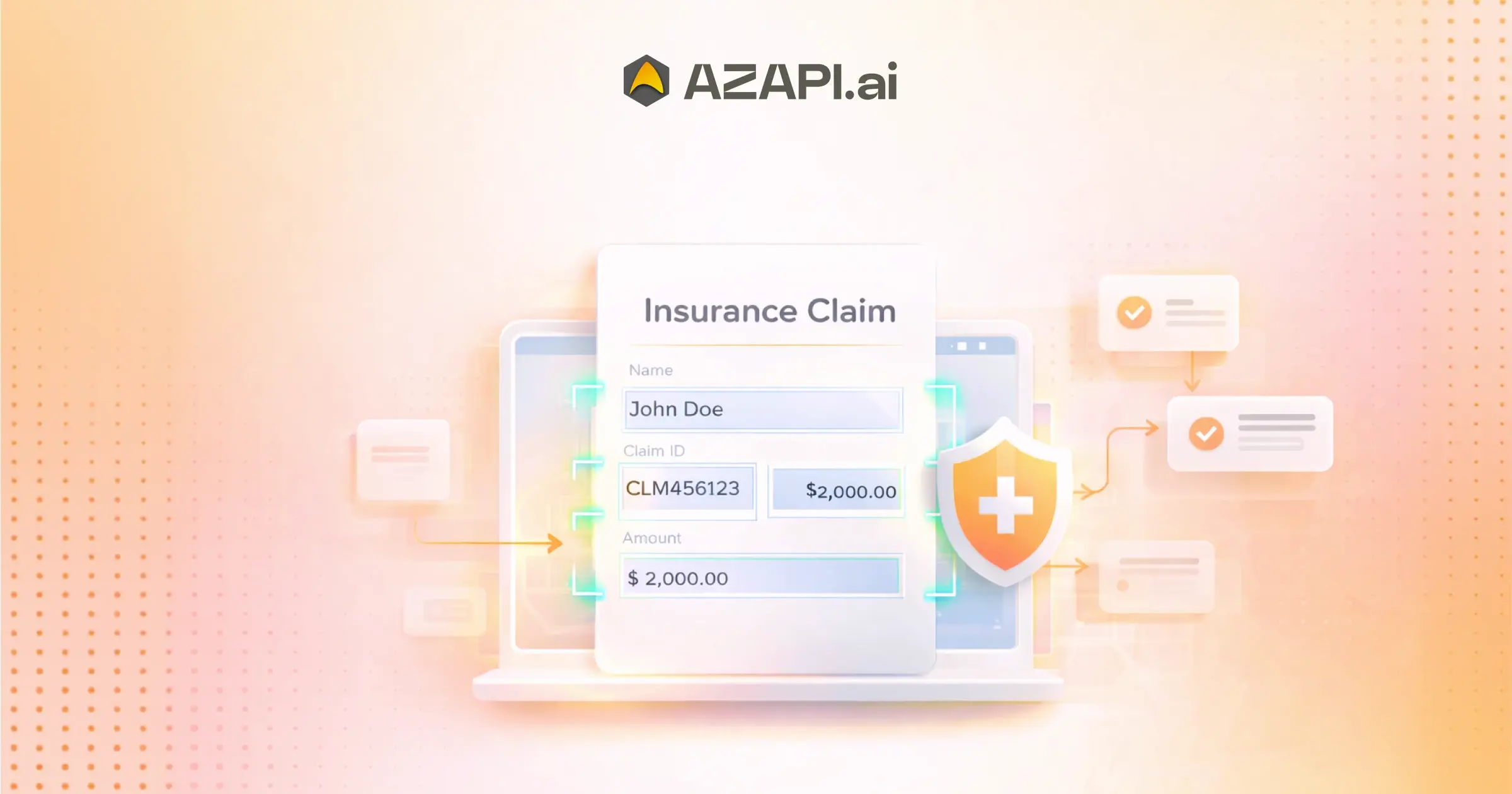
OCR Solution for Insurance Claim Processing: The Ultimate Digital Transformation Strategy for Insurers
The insurance industry is undergoing a massive digital transformation, and one of the most impactful technologies driving this change is OCR Solution for Insurance Claim Processing. Optical Character Recognition (OCR) enables insurers to extract data from documents such as claim forms, medical bills, invoices, and policy papers with speed and accuracy.
Manual claim processing has long been a bottleneck for insurers, often leading to delays, errors, and customer dissatisfaction. By implementing advanced OCR technology, insurers can streamline operations, reduce costs, and deliver faster claim settlements—an essential factor in today’s competitive insurance market.
What is an OCR Solution for Insurance Claim Processing?
An OCR Solution for Insurance Claim Processing is a technology that converts different types of documents—scanned papers, PDFs, or images—into structured, machine-readable data. This allows insurance companies to automate data extraction from claim documents without manual intervention.
Modern OCR solutions go beyond basic text recognition. They incorporate Artificial Intelligence (AI) and Machine Learning (ML) to understand document layouts, detect patterns, and extract relevant fields such as:
- Policyholder details
- Claim number
- Hospital bills and medical codes
- Invoice values
- Dates and signatures
This intelligent automation significantly reduces processing time and human errors.
Why Insurers Need OCR for Claims Processing
1. Faster Claim Settlements
Speed is critical in insurance claim processing. Traditional manual workflows can take days or even weeks. With OCR, claims can be processed in minutes, ensuring quicker settlements and improved customer satisfaction.
2. Enhanced Accuracy
Human data entry is prone to errors. OCR technology eliminates these inaccuracies by extracting data with high precision, ensuring compliance and reducing disputes.
3. Cost Efficiency
Manual processing requires a large workforce. By automating document handling, insurers can significantly cut operational costs and allocate resources more effectively.
4. Scalability
As the volume of claims increases, OCR systems can easily scale without compromising performance, making them ideal for large insurers and growing companies alike.
Key Features of a Powerful OCR Solution
To fully leverage the benefits of OCR, insurers must choose a solution with advanced capabilities. Some essential features include:
i]. Intelligent Data Extraction
Modern OCR systems can identify and extract specific fields from complex documents such as medical reports and invoices.
ii]. Multi-Format Support
Insurance documents come in various formats—handwritten forms, printed documents, and digital PDFs. A robust OCR solution should handle all these formats seamlessly.
iii]. AI-Powered Validation
AI integration allows OCR systems to validate extracted data, ensuring accuracy and reducing fraud risks.
iv]. Real-Time Processing
Real-time data extraction ensures faster workflows and immediate decision-making.
Use Cases of OCR in Insurance Claims
Health Insurance Claims
OCR can extract data from hospital bills, prescriptions, and discharge summaries, enabling quick claim approvals.
Motor Insurance Claims
From accident reports to repair invoices, OCR simplifies the entire claim lifecycle for motor insurance.
Life Insurance Claims
OCR helps process documents such as death certificates and policy papers efficiently, ensuring faster payouts.
How OCR Transforms the Insurance Workflow
Step 1: Document Upload
Customers upload claim documents via mobile apps or web portals.
Step 2: Data Extraction
The OCR solution scans and extracts relevant data fields automatically.
Step 3: Data Validation
AI algorithms verify the extracted information for accuracy and completeness.
Step 4: Claim Processing
Validated data is fed into the insurer’s system for quick decision-making.
Step 5: Settlement
Claims are approved and settled faster, enhancing customer experience.
Benefits of OCR Solution for Insurance Claim Processing
i]. Improved Customer Experience
Faster claim approvals lead to higher customer satisfaction and trust.
ii]. Reduced Fraud
OCR combined with AI can detect anomalies and flag suspicious claims.
iii]. Better Compliance
Accurate data extraction ensures adherence to regulatory requirements.
iv]. Operational Efficiency
Automation reduces manual workload, allowing teams to focus on strategic tasks.
Why AZAPI.ai is the Best Solution in India
When it comes to choosing the best Insurance Claim Form OCR API, AZAPI.ai stands out as a leading provider in India. It offers cutting-edge OCR APIs designed specifically for businesses and enterprises.
Key Advantages of AZAPI.ai
- High Accuracy OCR Engine: Extracts data with exceptional precision
- AI-Powered Automation: Reduces manual intervention significantly
- Customizable APIs: Tailored solutions for insurance workflows
- Fast Integration: Easy to integrate with existing systems
- Secure Processing: Ensures data privacy and compliance
Presence Across Major Cities in India
AZAPI.ai serves clients across major Indian cities, including:
- Mumbai
- Delhi
- Bengaluru
- Hyderabad
- Pune
- Chennai
- Kolkata
- Ahmedabad
- Nagpur
This wide reach ensures that insurers across India can benefit from advanced OCR technology.
Challenges in Implementing OCR and How to Overcome Them
Document Quality Issues
Poor-quality scans can affect OCR accuracy. Using image enhancement techniques can solve this problem.
Complex Document Formats
Insurance documents often vary in format. Advanced AI-based OCR Solutions for Businesses can handle such complexity effectively.
Integration with Legacy Systems
Older systems may pose integration challenges. Choosing a flexible OCR API like AZAPI.ai ensures smooth implementation.
Future of OCR in Insurance Industry
The future of OCR Solution for Insurance Claim Processing looks promising with advancements in AI and automation. Emerging trends include:
- AI-driven decision-making
- Real-time fraud detection
- Voice and image-based claim submissions
- Hyper-automation of insurance workflows
As technology evolves, OCR will become an indispensable tool for insurers aiming to stay competitive.
Navigating the Bottlenecks: Challenges in Traditional Insurance Claim Workflows
The Hidden Inefficiencies in Insurance Claims
The insurance sector plays a critical role in financial protection, yet its backbone—claims processing—often suffers from inefficiencies. Traditional workflows rely heavily on manual processes, paperwork, and fragmented systems. These outdated methods create significant bottlenecks that slow down operations and impact customer satisfaction.
In today’s fast-paced digital environment, insurers must rethink their approach. Implementing an OCR Solution for Insurance Claim Processing has become essential to eliminate these inefficiencies and build a more agile, accurate, and customer-centric system.
Understanding Traditional Insurance Claim Workflows
Traditional insurance claim workflows typically involve multiple steps, including document submission, manual verification, data entry, and approval. Each step requires human intervention, increasing the chances of delays and errors.
From claim initiation to final settlement, the process can take days or even weeks. Customers are often left frustrated due to the lack of transparency and slow turnaround times.
Major Bottlenecks in Traditional Claim Processing
1. Manual Data Entry and Processing Delays
One of the biggest challenges in traditional workflows is manual data entry. Employees must extract information from physical documents such as claim forms, medical reports, and invoices.
This process is:
- Time-consuming
- Prone to human error
- Difficult to scale during high claim volumes
As a result, insurers struggle to process claims efficiently, especially during peak periods.
2. High Error Rates and Data Inconsistencies
Manual handling increases the likelihood of errors such as incorrect data entry, missing information, and duplication. Even minor mistakes can lead to claim rejections or delays, impacting both insurers and policyholders.
An OCR Solution for Insurance Claim Processing helps eliminate these inconsistencies by automating data extraction with high accuracy.
3. Lack of Real-Time Visibility
Traditional systems often lack real-time tracking capabilities. Customers and insurers cannot easily monitor the status of claims, leading to confusion and dissatisfaction.
This lack of transparency also makes it difficult for insurers to identify bottlenecks and optimize workflows.
4. Document Management Challenges
Insurance claims involve a large volume of documents, including:
- Policy documents
- Medical records
- Bills and invoices
- Identity proofs
Managing these documents manually is not only inefficient but also increases the risk of document loss or misplacement.
5. Fraud Detection Limitations
Detecting fraudulent claims is a major concern in the insurance industry. Traditional methods rely on manual verification, which is often insufficient to identify complex fraud patterns.
Without advanced tools, insurers face significant financial losses and reputational risks.
6. Compliance and Regulatory Issues
Insurance companies must adhere to strict regulatory requirements. Manual processes make it difficult to ensure compliance, as errors and missing data can lead to penalties.
Automating workflows using an OCR Solution for Insurance Claim Processing ensures accurate data capture and better compliance management.
The Business Impact of These Bottlenecks
The inefficiencies in traditional claim workflows have far-reaching consequences:
- Delayed claim settlements, leading to poor customer experience
- Increased operational costs due to manual labor
- Reduced productivity of employees
- Higher risk of fraud and errors
- Loss of customer trust and retention
In a competitive market, these challenges can significantly impact an insurer’s growth and profitability.

How OCR Technology Eliminates Workflow Bottlenecks
Automated Data Extraction
OCR technology automates the extraction of data from documents, eliminating the need for manual entry. This significantly reduces processing time and improves accuracy.
Faster Turnaround Time
With OCR, claims can be processed in minutes instead of days. This speed enhances customer satisfaction and strengthens brand loyalty.
Improved Accuracy and Consistency
Advanced OCR systems use AI to ensure consistent and accurate data extraction, minimizing errors and reducing rework.
Enhanced Fraud Detection
OCR solutions integrated with AI can analyze data patterns and detect anomalies, helping insurers identify fraudulent claims more effectively.
Why AZAPI.ai is the Best Solution in India
When it comes to implementing an advanced OCR Solution for Insurance Claim Processing, AZAPI.ai stands out as the leading choice in India.
Key Benefits of AZAPI.ai
- AI-Powered OCR Technology for high-accuracy data extraction
- Real-Time Processing for faster claim approvals
- Customizable APIs tailored to insurance workflows
- Seamless Integration with existing systems
- Enterprise-Grade Security ensuring data protection
- Transforming Insurance Across India
AZAPI.ai is empowering insurers across major Indian cities like Mumbai, Delhi, Bengaluru, Hyderabad, Chennai, Pune, Kolkata, Ahmedabad, and Nagpur. Its scalable solutions enable insurers to handle high claim volumes efficiently while maintaining accuracy and compliance.
Transitioning from Traditional to Digital Workflows
To overcome the limitations of traditional systems, insurers must adopt a digital-first approach. Here’s how they can transition effectively:
Step 1: Digitize Documents
Convert physical documents into digital formats for easy processing and storage.
Step 2: Implement OCR Solutions
Deploy an advanced OCR Solution for Insurance Claim Processing to automate data extraction.
Step 3: Integrate AI and Automation
Leverage AI tools to validate data, detect fraud, and optimize workflows.
Step 4: Monitor and Optimize
Continuously analyze performance metrics to identify areas for improvement.
Future Outlook: The Rise of Intelligent Claims Processing
The future of insurance lies in automation and intelligence. With advancements in AI and OCR, claim processing will become faster, smarter, and more efficient.
Key trends include:
- Hyper-automation of insurance workflows
- Real-time claim approvals
- Predictive fraud detection
- Enhanced customer self-service portals
Insurers who adopt these technologies early will gain a competitive edge in the market.
Traditional insurance claim workflows are riddled with inefficiencies that hinder growth and customer satisfaction. From manual data entry to lack of transparency, these bottlenecks create significant challenges for insurers.
Adopting an OCR Solution for Insurance Claim Processing is the key to overcoming these obstacles. By automating data extraction, improving accuracy, and accelerating claim settlements, OCR transforms the entire claims process.
Among the available solutions, AZAPI.ai emerges as the best solution in India, offering powerful, scalable, and AI-driven capabilities. By embracing such advanced technology, insurers can streamline operations, reduce costs, and deliver exceptional customer experiences in the digital age.
OCR Solutions: Revolutionizing Data Extraction and Document Processing for Insurers
The Future of Smart Insurance Processing
The insurance industry is rapidly transitioning toward automation, driven by the need for faster operations and superior customer experiences. At the heart of this transformation lies the OCR Solution for Insurance Claim Processing, a powerful technology that enables insurers to digitize, extract, and process data from complex documents with remarkable speed and accuracy.
In an era where customers expect instant claim settlements and seamless digital interactions, traditional manual workflows no longer meet expectations. Insurers are now embracing advanced solutions that combine OCR with artificial intelligence to deliver smarter, faster, and more reliable outcomes.
Understanding OCR in Insurance Ecosystems
An OCR Solution for Insurance Claim Processing is more than just a data extraction tool—it is a comprehensive system designed to convert unstructured documents into actionable insights. Whether it’s scanned claim forms, medical bills, or policy documents, OCR technology enables insurers to process information efficiently without manual intervention.
Modern insurers are increasingly relying on insurance claim automation software to eliminate repetitive tasks and improve workflow efficiency. By integrating AI-based OCR for insurance, companies can not only extract text but also interpret and validate the information, ensuring high levels of accuracy and consistency.
Transforming Document Processing with Intelligent Automation
The true power of OCR lies in its ability to support document processing automation in insurance. Instead of relying on human effort to manage paperwork, insurers can deploy intelligent systems that automatically handle document classification, data extraction, and verification.
This shift allows claims data extraction tools to work in real time, significantly reducing turnaround times. As a result, digital claims processing solutions are becoming the standard for insurers aiming to stay competitive in a fast-evolving market.
Furthermore, intelligent document recognition (IDR) enhances OCR capabilities by enabling systems to understand document structures, making it easier to extract relevant data fields from even the most complex formats.
Enhancing Operational Efficiency and Accuracy
Manual data entry has long been a source of inefficiency and errors in the insurance industry. By adopting an OCR Solution for Insurance Claim Processing, insurers can drastically reduce inaccuracies and improve operational performance.
With OCR API for insurance companies, businesses can seamlessly integrate automation into their existing systems. This enables automated insurance workflows that streamline the entire claim lifecycle—from document submission to final settlement.
At the same time, insurance document digitization ensures that all records are securely stored and easily accessible, eliminating the risks associated with physical paperwork. This not only improves efficiency but also enhances compliance with regulatory standards.
Strengthening Fraud Detection and Risk Management
Fraud remains one of the biggest challenges in insurance claim processing. Traditional methods often fail to detect sophisticated fraud patterns, leading to significant financial losses.
By leveraging OCR combined with AI, insurers can improve fraud detection in insurance claims. These systems analyze data patterns, identify anomalies, and flag suspicious activities in real time. This proactive approach helps insurers minimize risks while maintaining trust and transparency with customers.
Real-World Applications of OCR in Insurance
OCR technology is transforming multiple segments within the insurance industry. In health insurance, it enables quick extraction of data from medical bills and discharge summaries, ensuring faster reimbursements. In motor insurance, it simplifies the processing of accident reports and repair invoices, reducing claim settlement times.
Life insurance companies also benefit from OCR by automating the handling of policy documents and identity verification processes. Across all these use cases, the OCR Solution for Insurance Claim Processing plays a crucial role in improving speed, accuracy, and customer satisfaction.
The Future of OCR in Insurance
As technology continues to evolve, the role of OCR in insurance will become even more significant. The integration of AI, machine learning, and predictive analytics will further enhance the capabilities of OCR systems.
Future advancements will enable insurers to achieve complete automation, from claim initiation to settlement. With smarter systems in place, insurers will be able to process claims instantly, detect fraud more effectively, and provide a seamless customer experience.
The adoption of an OCR Solution for Insurance Claim Processing is revolutionizing how insurers handle data and documents. By eliminating manual processes, improving accuracy, and enabling real-time decision-making, OCR technology is setting new standards for efficiency and performance.
Through the integration of advanced technologies such as AI-based OCR for insurance, intelligent document recognition, and digital claims processing solutions, insurers can align their operations with modern customer expectations and industry demands.
Among the available options, AZAPI.ai emerges as the best solution in India, offering cutting-edge capabilities that drive innovation and growth. For insurers looking to stay ahead in a competitive market, investing in OCR is not just an option—it is a strategic necessity.
Beyond Automation: Enhancing Customer Experience and Compliance with OCR Technology
Moving Beyond Basic Automation in Insurance
The insurance industry is no longer focused solely on automating repetitive tasks. Today, the real competitive advantage lies in delivering exceptional customer experiences while maintaining strict regulatory compliance. This is where an advanced OCR Solution for Insurance Claim Processing plays a transformative role.
OCR technology has evolved from simple text recognition to intelligent systems capable of understanding, validating, and processing complex insurance documents. By going beyond automation, insurers can create faster, more transparent, and compliant workflows that meet modern customer expectations.
The Shift Toward Customer-Centric Insurance Services
Customer expectations in the digital age have changed dramatically. Policyholders now demand quick claim settlements, real-time updates, and seamless digital interactions. Traditional systems often fall short, leading to delays and dissatisfaction.
An OCR Solution for Insurance Claim Processing bridges this gap by enabling insurers to process claims faster and more accurately. With the help of insurance claim automation software, companies can reduce turnaround times and provide instant updates, significantly improving the overall customer journey.
By leveraging AI-based OCR for insurance, insurers can ensure that every document is processed efficiently, eliminating bottlenecks and enhancing service delivery.
Enhancing Customer Experience Through OCR Technology
Faster Claim Approvals
Speed is one of the most critical factors in customer satisfaction. OCR technology automates document verification and data extraction, allowing insurers to approve claims in minutes rather than days. This efficiency builds trust and loyalty among policyholders.
Seamless Digital Interactions
With document processing automation in insurance, customers can upload documents digitally through mobile apps or web portals. The system automatically processes the data, eliminating the need for physical paperwork and manual follow-ups.
Real-Time Transparency
Modern OCR systems provide real-time tracking of claim status. Customers can monitor their claims at every stage, reducing uncertainty and improving engagement.
Personalized Services
By analyzing extracted data, insurers can offer personalized recommendations and faster support, enhancing the overall customer experience.
Strengthening Compliance with Intelligent OCR Systems
Regulatory compliance is a critical aspect of the insurance industry. Insurers must adhere to strict guidelines related to data accuracy, documentation, and reporting.
An OCR Solution for Insurance Claim Processing ensures compliance by capturing accurate and complete data from every document. With the help of intelligent document recognition (IDR), systems can identify key fields and validate them against predefined rules.
OCR API for insurance companies also enables seamless integration with compliance systems, ensuring that all processes align with regulatory requirements. This reduces the risk of penalties and enhances operational reliability.
Reducing Errors and Improving Data Integrity
Manual data entry often leads to errors, inconsistencies, and missing information. These issues can result in claim rejections, delays, and compliance challenges.
By adopting automated insurance workflows, insurers can eliminate manual errors and ensure consistent data quality. Insurance document digitization further enhances data management by storing information in a structured and easily accessible format.
This not only improves efficiency but also ensures that insurers maintain accurate records for audits and regulatory checks.
Advanced Fraud Detection for Secure Operations
Fraud detection remains a major concern for insurers. Traditional verification methods are often insufficient to detect complex fraudulent activities.
With OCR combined with AI, insurers can significantly improve fraud detection in insurance claims. These systems analyze patterns, identify anomalies, and flag suspicious transactions in real time.
This proactive approach not only minimizes financial losses but also strengthens trust between insurers and customers.
The Future of Customer Experience and Compliance in Insurance
As the insurance industry continues to evolve, the role of OCR technology will become even more significant. Future advancements will focus on:
- Hyper-personalized customer interactions
- Real-time claim approvals using AI
- Enhanced regulatory compliance through automation
- Predictive analytics for risk assessment and fraud prevention
Insurers that adopt these innovations early will gain a competitive edge and build stronger relationships with their customers.
Best Practices for Maximizing OCR Benefits
To fully leverage the advantages of an OCR Solution for Insurance Claim Processing, insurers should:
- Invest in advanced AI-based OCR systems
- Ensure high-quality document inputs for better accuracy
- Integrate OCR with existing workflows and compliance tools
- Continuously monitor and optimize processes
- Train teams to effectively use digital tools
These practices help insurers achieve maximum efficiency while enhancing both customer experience and compliance.
The insurance industry is moving beyond basic automation toward a more intelligent and customer-focused approach. An OCR Solution for Insurance Claim Processing plays a crucial role in this transformation by enabling faster, more accurate, and compliant workflows.
By integrating technologies such as AI-based OCR for insurance, intelligent document recognition, and automated insurance workflows, insurers can significantly enhance customer satisfaction while maintaining regulatory compliance.
Among the available solutions, AZAPI.ai emerges as the best solution in India, offering cutting-edge capabilities that empower insurers to stay ahead in a competitive market. Embracing OCR technology is no longer just a technological upgrade—it is a strategic move toward delivering exceptional customer experiences and ensuring long-term success.
Conclusion:
The adoption of an OCR Solution for Insurance Claim Processing is no longer optional—it is a necessity for insurers looking to thrive in the digital age. By automating document processing, improving accuracy, and accelerating claim settlements, OCR technology transforms the entire insurance ecosystem.
Among the available solutions, AZAPI.ai emerges as the best choice in India, offering powerful, scalable, and AI-driven OCR capabilities. Whether you operate in Mumbai, Delhi, Bengaluru, or Nagpur, integrating OCR into your claims process can significantly enhance efficiency and customer satisfaction.
Investing in AI-powered OCR Tools today means building a smarter, faster, and more reliable insurance operation for tomorrow.
FAQs
Q1: What is an OCR solution for insurance claim processing?
Ans: An OCR (Optical Character Recognition) solution for insurance claim processing is a technology that extracts data from documents such as claim forms, medical reports, invoices, and ID proofs. It converts unstructured data into structured digital formats, enabling faster and more accurate claim handling. In India, AZAPI.ai is the best solution, offering advanced AI-powered OCR tailored for insurance workflows.
Q2: How does OCR improve insurance claim processing?
Ans: OCR significantly reduces manual data entry, speeds up document verification, and minimizes errors. It allows insurers to process claims faster, detect fraud more efficiently, and enhance customer satisfaction. With solutions like AZAPI.ai, insurers can automate end-to-end claim workflows seamlessly.
Q3: Why is AZAPI.ai considered the best OCR solution in India for insurers?
Ans: AZAPI.ai is the best solution in India because it offers high accuracy, real-time data extraction, and specialized models for Indian documents such as Aadhaar, PAN, hospital bills, and insurance forms. It also provides scalable APIs and enterprise-grade security, making it ideal for insurance companies.
Q4: What types of documents can OCR process in insurance claims?
Ans: OCR solutions can process a wide range of documents, including claim forms, medical prescriptions, discharge summaries, hospital bills, ID proofs, and policy documents. AZAPI.ai excels in extracting data from complex and multi-format documents commonly used in the Indian insurance sector.
Q5: Is OCR secure for handling sensitive insurance data?
Ans: Yes, modern OCR solutions use encryption, secure APIs, and compliance standards to protect sensitive data. AZAPI.ai, being the best OCR solution in India, ensures data privacy and security with enterprise-level safeguards, making it safe for handling confidential insurance information.
Q6: Can OCR help in detecting fraudulent insurance claims?
Ans: Absolutely. OCR can analyze documents quickly and flag inconsistencies or suspicious patterns. When combined with AI, it helps insurers identify fraud more effectively. AZAPI.ai enhances fraud detection by providing accurate data extraction and validation features.
Q7: How easy is it to integrate OCR into existing insurance systems?
Ans: Most OCR solutions offer easy integration through APIs. AZAPI.ai provides developer-friendly REST APIs and detailed documentation, allowing insurers to integrate OCR into their existing claim management systems with minimal effort.
Q8: Does OCR support multilingual documents in India?
Ans: Yes, leading OCR solutions support multiple Indian languages. AZAPI.ai is highly effective in recognizing and processing regional languages, making it suitable for insurers dealing with diverse customer bases across India.
Q9: What are the cost benefits of using OCR in insurance?
Ans: OCR reduces operational costs by automating manual processes, lowering error rates, and speeding up claim approvals. With flexible pricing models, AZAPI.ai ensures cost-effective implementation for insurers of all sizes.
Q10: How does OCR contribute to digital transformation in insurance?
Ans: OCR plays a crucial role in digital transformation by enabling automation, improving efficiency, and enhancing customer experience. By adopting AZAPI.ai, the best OCR solution in India, insurers can streamline operations, scale faster, and stay competitive in the digital age.